Emergency Water Storage
Does Bottled Water Expire?
The date on the bottle is real, but it does not come from a government shelf-life rule. Here is who sets it, what the agencies actually say, and how to run a bottled supply so the question never catches you out.
No U.S. agency sets a shelf life for sealed bottled water. The CDC calls unopened, commercially bottled water the safest and most reliable source of water in an emergency and says to observe the expiration date on store-bought water. Ready.gov says to keep it sealed in the original container in a cool, dark place. So the printed date is the bottler’s, and your storage conditions decide the rest.
What you’ll learn
The short version
Bottled water carries a date set by the company that bottled it, and the public-health instruction is simply to follow that date and store the water well.
- No agency publishes a shelf life for sealed bottled water.
- The CDC says to observe the date on store-bought water.
- Keep it sealed, cool (50°F to 70°F), dark, and away from fuel and pesticides.
- Water you bottle yourself is different: replace it every 6 months.
- Rotate before the date so you never have to decide about an old bottle.
Step 1
Who sets the date on bottled water
The date printed on bottled water is set by the bottler, not by a federal shelf-life rule, and the agencies tell you to follow it.
Bottled water in the United States is regulated as a food. The Food and Drug Administration (FDA) regulates bottled drinking water, while the Environmental Protection Agency (EPA) regulates public drinking water from the tap. The FDA’s bottled-water page describes Current Good Manufacturing Practices that require bottlers to process, bottle, hold and transport water under sanitary conditions, protect their sources, use quality control, and test both source water and the finished product.
What that FDA page does not do is set a shelf life. It says nothing about expiration dates, “best by” dates or how long bottled water lasts. The CDC and Ready.gov are the two agencies that speak to bottled water as an emergency supply, and neither of them sets a storage limit either. They defer to the date on the product.
| Agency | What it says | What it does not say |
|---|---|---|
| CDC | Unopened, commercially bottled water is the safest and most reliable source of water in an emergency. Observe the expiration date for store-bought water. | Any shelf life, or any rule for water past its date. |
| Ready.gov | Store commercially bottled water in the sealed original container in a cool, dark place. | Any replacement schedule for sealed bottled water. |
| FDA | Regulates bottled water and requires sanitary production and testing under its manufacturing practices. | Expiration dates, “best by” dates or shelf life, on its bottled-water safety page. |
So the honest answer to “does bottled water expire?” is that the only date that applies to a particular bottle is the one its bottler printed. There is no agency rule behind it to look up, and no agency rule that overrides it.
Step 2
What the printed date means, and what it does not
A bottled-water date is the bottler’s statement about its own product, and different bottlers use different wording for it.
Some bottles say “best by,” some say “best before,” some print a bare date next to a batch code. The CDC’s instruction uses the phrase “expiration date,” but the agency does not define what a bottler’s date measures, and neither does any page cited here. This page will not guess on the bottler’s behalf. A date that one company chose for taste or packaging reasons may mean something different from another company’s date.
For emergency planning, the distinction matters less than it sounds. The instruction from the CDC is the same whatever the wording: observe the date. Treat it as the end of that bottle’s time in your emergency supply, and plan to use or replace it before then.
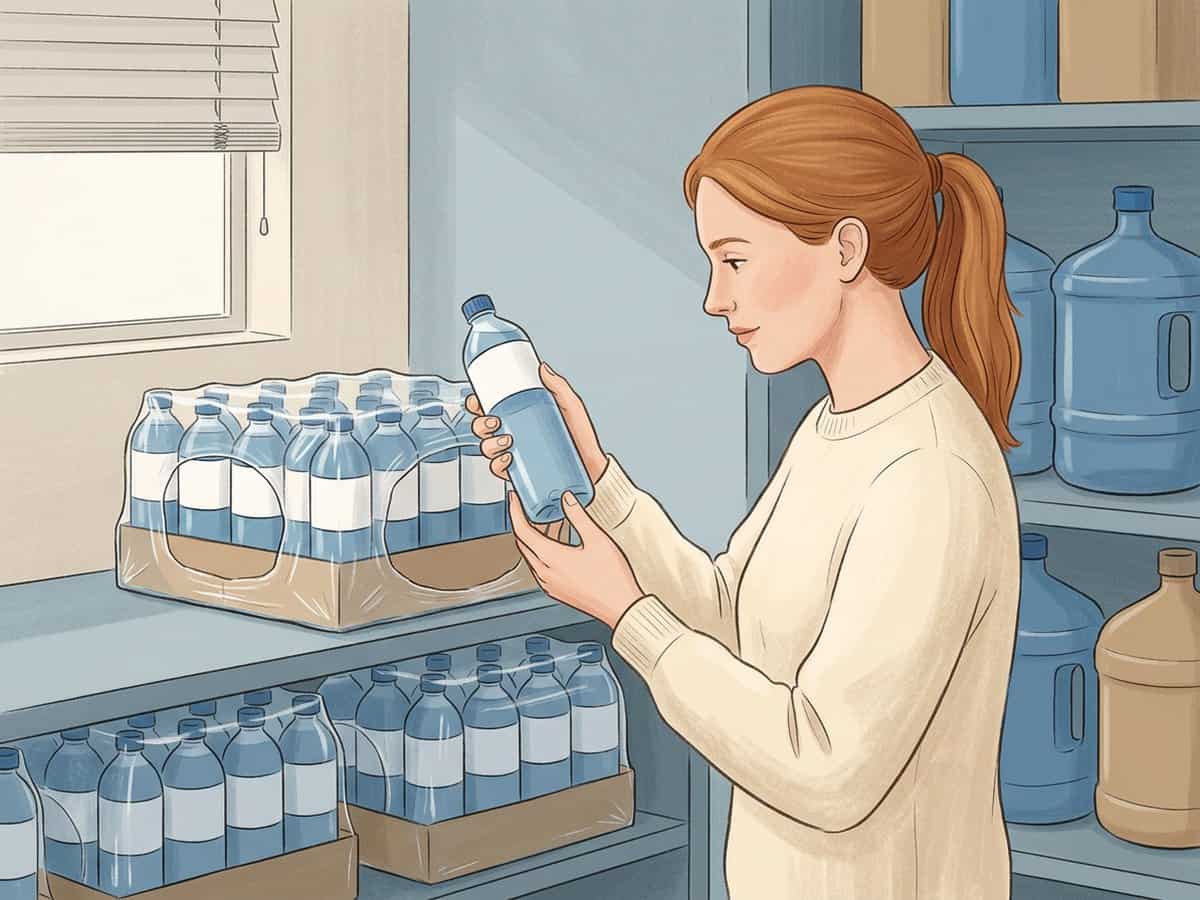
Where to find it. The date is usually printed on the cap, the neck, the shoulder of the bottle, or the shrink-wrap of a case. On multipacks, check the individual bottles too; they can differ from the case label.
Step 3
Can you drink bottled water past the date?
No U.S. public-health agency publishes guidance on drinking bottled water past its printed date, and this page will not fill that gap with a guess.
The CDC’s instruction is to observe the date. It does not say what happens after it, and it does not say that past-date water becomes unsafe on a particular day. Ready.gov is silent on the question too. Any confident answer you read elsewhere, in either direction, is somebody’s opinion rather than published guidance.
The practical way to handle that silence is to make sure you never have to answer the question at home. Rotate your bottled supply so the oldest bottles get used in everyday life well before their dates, and replace them as you go. Then an emergency never finds you holding a case that went past its date in the back of a cupboard.
During an active emergency, instructions from local officials and your water utility come first. If you are unsure whether any water is safe to drink, including stored water, ask them. If the water may contain fuel, chemicals, salts, or other non-microbial contamination, do not assume boiling or disinfection makes it safe.
Step 4
Heat, sun and garages: where bottled water goes wrong
Storage conditions do more to decide whether bottled water is still fit for an emergency supply than the calendar does.
The CDC’s storage instructions give three conditions: keep containers in a cool place between 50°F and 70°F, keep them away from direct sunlight, and keep them away from toxic substances such as gasoline or pesticides. Ready.gov adds the same idea in fewer words: sealed, cool and dark.
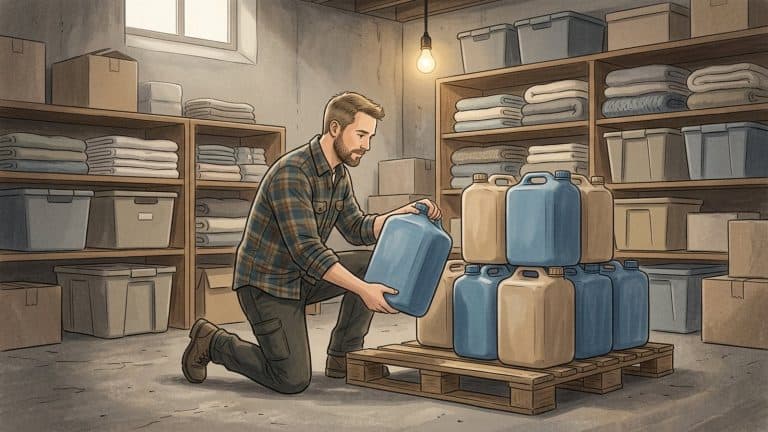
Those three conditions are easy to break without noticing. A case of water on a garage shelf can sit in summer heat for months. A multipack in a car trunk goes through repeated hot days. A pallet by a sunny window gets direct light every afternoon. And garages are where gasoline, lawn chemicals and pesticides tend to live.
| Location | Cool, 50°F–70°F | Out of direct sunlight | Away from fuel and pesticides |
|---|---|---|---|
| Interior closet | Usually | Usually | Usually |
| Cool basement | Often | Usually | Check nearby shelves |
| Uninsulated garage | Often not in summer or winter | Depends on windows | Often not |
| Parked car | Often not | Depends on where it sits | Check what else is stored with it |
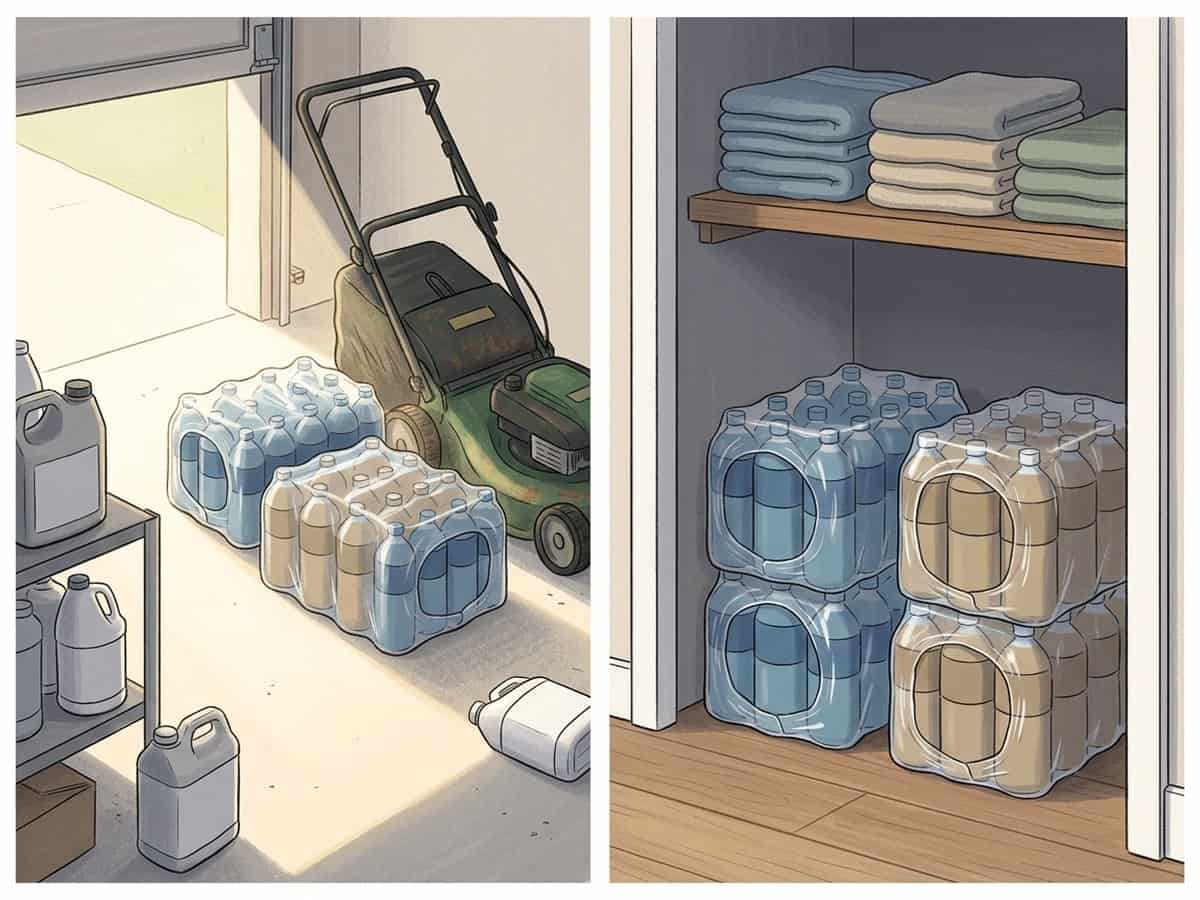
No agency cited here publishes a rule for what heat or sunlight does to sealed bottled water, so this page does not describe a chemical effect. It applies the conditions the agencies do publish. If a case has spent a long stretch outside them, treat that as a reason to rotate it out of your emergency supply early, whatever the printed date says.
Step 5
How long bottled water lasts once it is opened
Neither the CDC nor Ready.gov publishes guidance for opened bottled water, and an opened bottle no longer belongs in an emergency supply.
The CDC’s endorsement is specific: unopened, commercially bottled water. Once the seal is broken, the bottle is no longer that product. The printed date was set for a sealed bottle, and nothing published by the agencies cited here extends it to an open one.
The practical rule this site uses, labelled here as judgment rather than guidance, is simple. Drink an opened bottle soon, keep it cold and capped while you do, and never put an opened bottle back into your emergency stock. If you are not sure when a bottle was opened, or whether someone drank from it, it is an everyday drink, not a stored one.
Step 6
Glass bottles, big jugs, and the water you bottle yourself
The same rule covers every sealed commercial bottle, but glass and refilled containers each raise a separate question worth knowing.
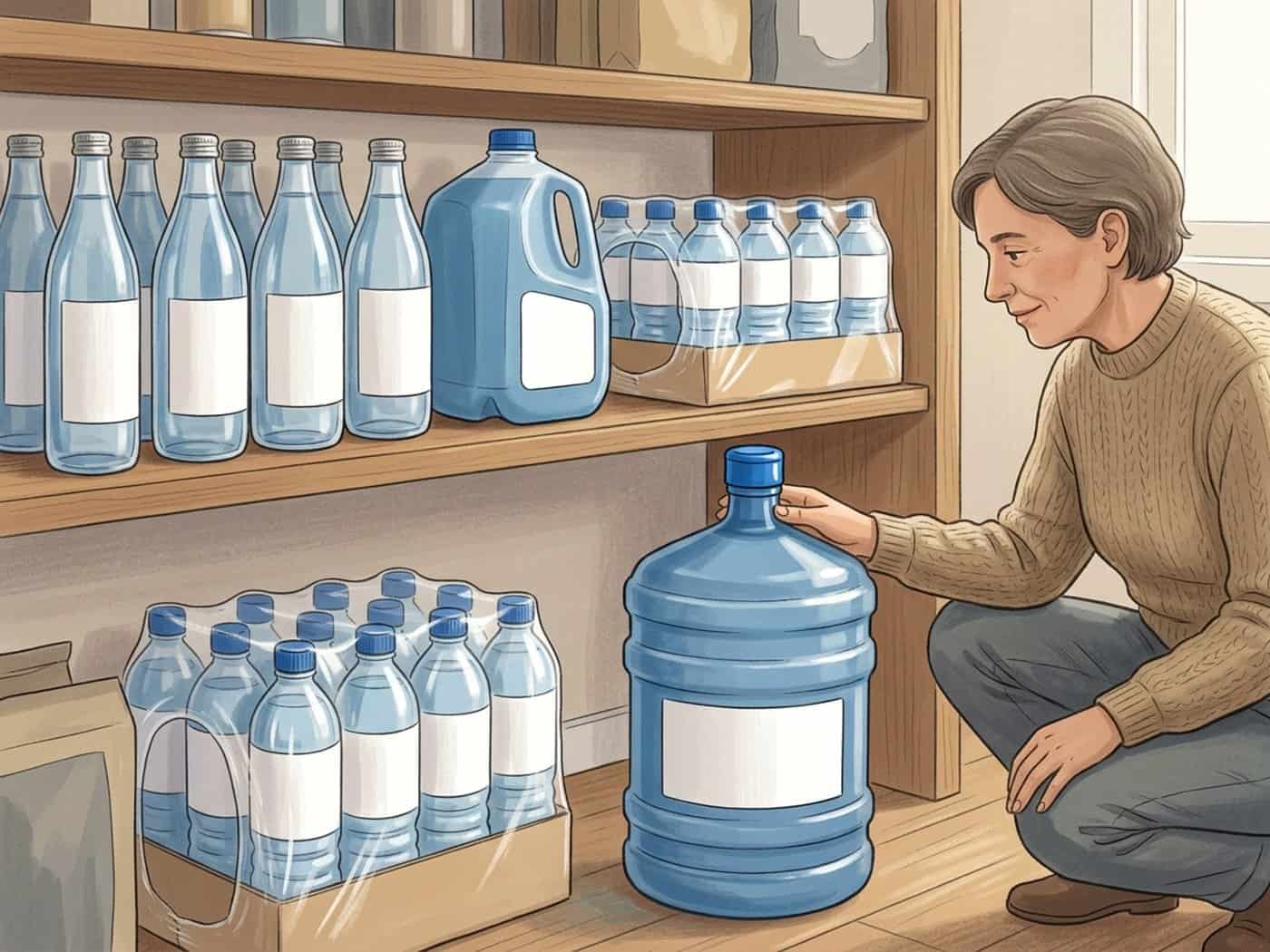
Spring, mineral, distilled and sparkling water. The rule does not change with the label. If it was sealed by a commercial bottler, follow that bottler’s date and store it sealed, cool and dark.
Water in glass bottles. The date question is the same. The storage question is not: the CDC’s guidance for stored water calls for containers made of durable, unbreakable materials, not glass. Glass can break when shelves shake or items fall, so it is a weaker choice for an emergency supply.
Large 3- and 5-gallon jugs. A factory-sealed jug from a commercial bottler follows its printed date like any other bottle. A jug you refilled yourself at a machine or a tap was not sealed by a bottler, so this site treats it like home-filled water.
Tap water you bottled yourself. This is home-filled water, and it runs on a different clock. The CDC says to replace water you stored yourself every 6 months. The storage-life guide explains that rule in detail.
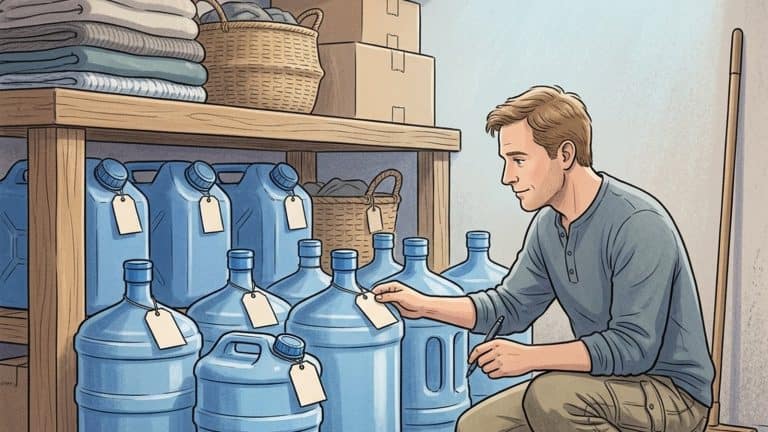
If your supply mixes store-bought and home-filled water, keep the two apart and mark them clearly. Six months later, a shelf of unlabelled bottles makes both rules impossible to follow. The full comparison is in how long emergency water can be stored.
Step 7
Running a bottled-water supply without waste
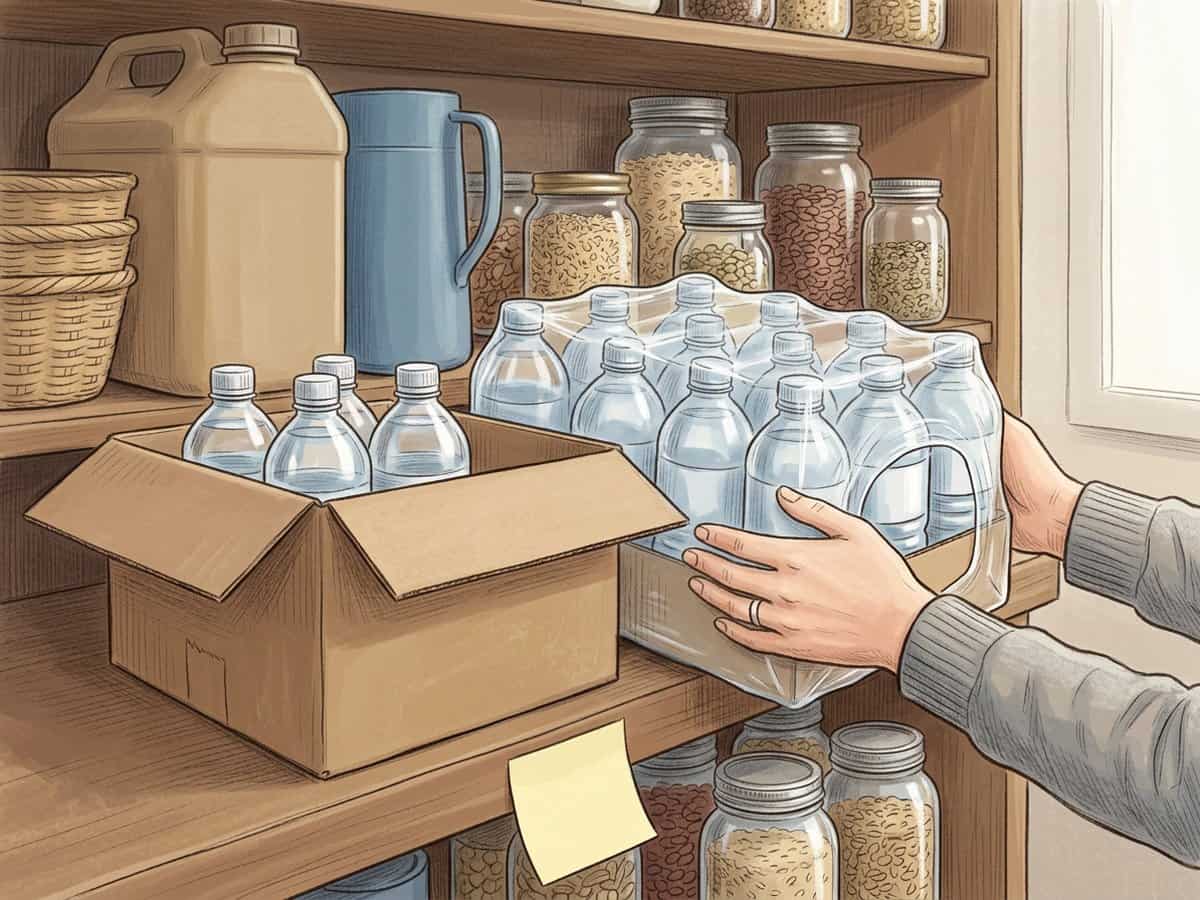
A bottled supply stays inside its dates when you size it from the agency allowance and rotate the oldest cases into daily use.
Start from the numbers. The CDC says to store at least 1 gallon of water per person per day for 3 days, and to try for a 2-week supply if possible. For a family of four that is 12 gallons for 3 days and 56 gallons for 2 weeks. There are 128 fluid ounces in a U.S. gallon, so 56 gallons is 7,168 fluid ounces, or about 425 bottles of a common 16.9 fl oz (500 mL) size, all calculated. At 8.329 pounds per gallon (USGS), that supply weighs about 466 pounds before packaging.
How many bottles does your household need?
Choose people, days and a bottle size. The panel uses the published allowance of 1 gallon per person per day.
How this is worked out. Gallons is people × days × 1, from the CDC allowance. Bottles is gallons × 128 ÷ bottle size in fluid ounces, rounded up to whole bottles. Weight is gallons × 8.329 pounds (USGS, water at 70°F), before packaging. All of it is arithmetic.
What it will not tell you. The panel does not give a replace-by date for bottled water, because no agency publishes one. Read the date on your bottles. It also adds nothing for heat, illness, infants or pets; Ready.gov says needs can double in very hot temperatures, so add a margin.
Every few months
Keep a bottled supply in date
0 of 5 steps checked
If you would rather store water in reusable containers than in bottles, the container guide compares the formats: best emergency water storage containers. If you are not sure how much a household really needs, start with how much water you need per day to survive.
Questions
Common questions about bottled water dates
These are the questions people search for most often about whether bottled water expires.
No U.S. agency sets a shelf life for sealed bottled water. The CDC says to observe the expiration date printed on store-bought water and describes unopened commercially bottled water as the safest and most reliable emergency source. The date is set by the bottler, so it is the one that applies to that product.
The date is chosen by the company that bottled the water. The FDA's bottled-water safety page does not mention expiration dates or shelf life, and the CDC and Ready.gov do not explain what a bottler's date measures. What they do say is to follow it and to keep bottled water sealed, cool and dark.
No U.S. public-health agency publishes guidance on drinking bottled water past its printed date. The CDC's instruction is to observe the date. The dependable approach is to rotate bottles into everyday use before their dates, and during an emergency to follow instructions from local officials about which water is safe.
Neither the CDC nor Ready.gov publishes a time limit for opened bottled water. The CDC's endorsement applies to unopened bottles, so an opened bottle no longer counts as part of an emergency supply. As a practical rule, drink it soon, keep it cold and capped, and never return it to stored water.
The CDC says to store water between 50°F and 70°F, away from direct sunlight and away from toxic substances such as gasoline or pesticides. Hot cars, sunny windows and summer garages break those conditions. If a case has spent a long stretch outside them, rotate it out of your emergency supply early.
Sealed commercial water in plastic bottles follows the bottler's printed date, according to the CDC's instruction to observe the date on store-bought water. Water you put into plastic bottles yourself is home-filled water, and the CDC says to replace it every 6 months.
The same rule applies to every brand of sealed commercial bottled water: follow the date that brand printed and store the bottles sealed, cool and dark. This page has not reviewed each brand's own documentation, so it does not state what any particular brand's date means.
Keep going
Where to go next
Bottled water is one half of a household supply, and these pages cover the other half.
Sources
Where these statements come from
Every agency statement on this page is quoted or paraphrased from one of these sources, checked in September 2026.
- Centers for Disease Control and Prevention, “How to Create and Store an Emergency Water Supply” (reviewed June 27, 2025). cdc.gov — unopened commercially bottled water as the safest and most reliable emergency source; observe the expiration date for store-bought water; 50°F–70°F; away from direct sunlight and toxic substances; durable, unbreakable containers, not glass; replace home-filled water every 6 months; 1 gallon per person per day for 3 days, 2 weeks if possible. Checked September 2026.
- Ready.gov, “Water.” ready.gov — store commercially bottled water in the sealed original container in a cool, dark place; needs can double in very hot temperatures. Checked September 2026.
- U.S. Food and Drug Administration, “FDA Regulates the Safety of Bottled Water Beverages Including Flavored Water and Nutrient-Added Water Beverages” (content current as of September 22, 2018). fda.gov — bottled-water manufacturing practices; FDA regulates bottled water and EPA regulates tap water; no statement on expiration dates or shelf life. Checked September 2026.
- U.S. Geological Survey, “Water Density.” usgs.gov — 8.329 pounds per U.S. gallon at 70°F, used for every weight on this page. Checked September 2026.