Product Comparison
Emergency Drinking Water: Canned, Boxed and Pouched Options Compared
Emergency drinking water bought sealed is the one kind of stored water you never fill, clean or treat. The formats differ in units per gallon, weight and printed dates. Here is what the agencies and the makers actually say.
The comparison
Emergency drinking water formats compared: can, pouch, bottle and box
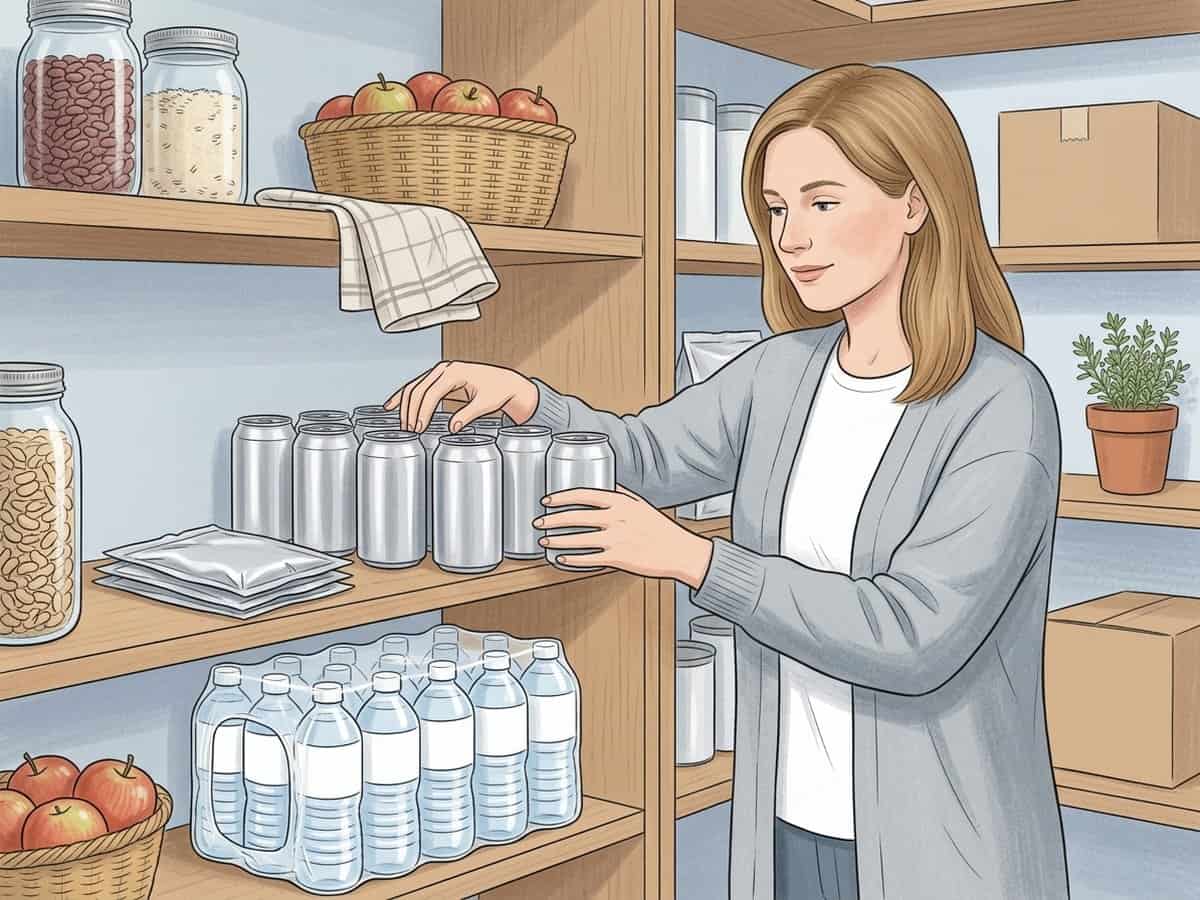
Emergency drinking water comes sealed in four common formats, and the practical difference between them is how many units it takes to make one gallon, the amount the CDC says to store per person per day.
| Format | Example size | Units per gallon (calculated) | Water weight per unit (calculated) | Best job | Weak spot |
|---|---|---|---|---|---|
| Aluminium can | 12 fl oz | About 10.7 | About 0.78 lb | A shelf or closet supply | An opened can cannot be closed again |
| Emergency pouch | 4.2 fl oz (125 mL) | About 30.5 | About 0.27 lb | Go-bags, car kits, desk drawers | Hundreds needed for a household supply |
| Plastic bottle | 16.9 fl oz (500 mL) | About 7.6 | About 1.10 lb | Everyday rotation at home | Cases stack poorly and dent |
| Carton (boxed water) | 500 mL (16.9 fl oz) | About 7.6 | About 1.10 lb | Square packs that fill a shelf without gaps | No boxed-water maker’s documentation was checked for this page |
How this table was built. It compares formats, not brands. Every count or weight is arithmetic, and packaging weight is not included. Product facts appear further down, only as each manufacturer states them.
One gallon of emergency drinking water, counted in each format
- About 10.7 cansof 12 fl oz (calculated)
- About 30.5 pouchesof 4.2 fl oz (calculated)
- About 7.6 bottles or cartonsof 500 mL (calculated)
What decides it
What the agencies say about sealed emergency drinking water
Sealed emergency drinking water is the kind the CDC trusts most: the CDC calls unopened, commercially bottled water “the safest and most reliable source of water in an emergency.”
That sentence comes from the CDC page How to Create and Store an Emergency Water Supply, which also says to “store at least 1 gallon of water per person, per day for 3 days” and to “try to store a 2-week supply if possible.” For store-bought water the instruction is short: “Observe the expiration date for store-bought water.”
A can or a carton counts as bottled water. Under the Food and Drug Administration’s standard of identity, 21 CFR 165.110, bottled water is water intended for human consumption “sealed in bottles or other containers.”
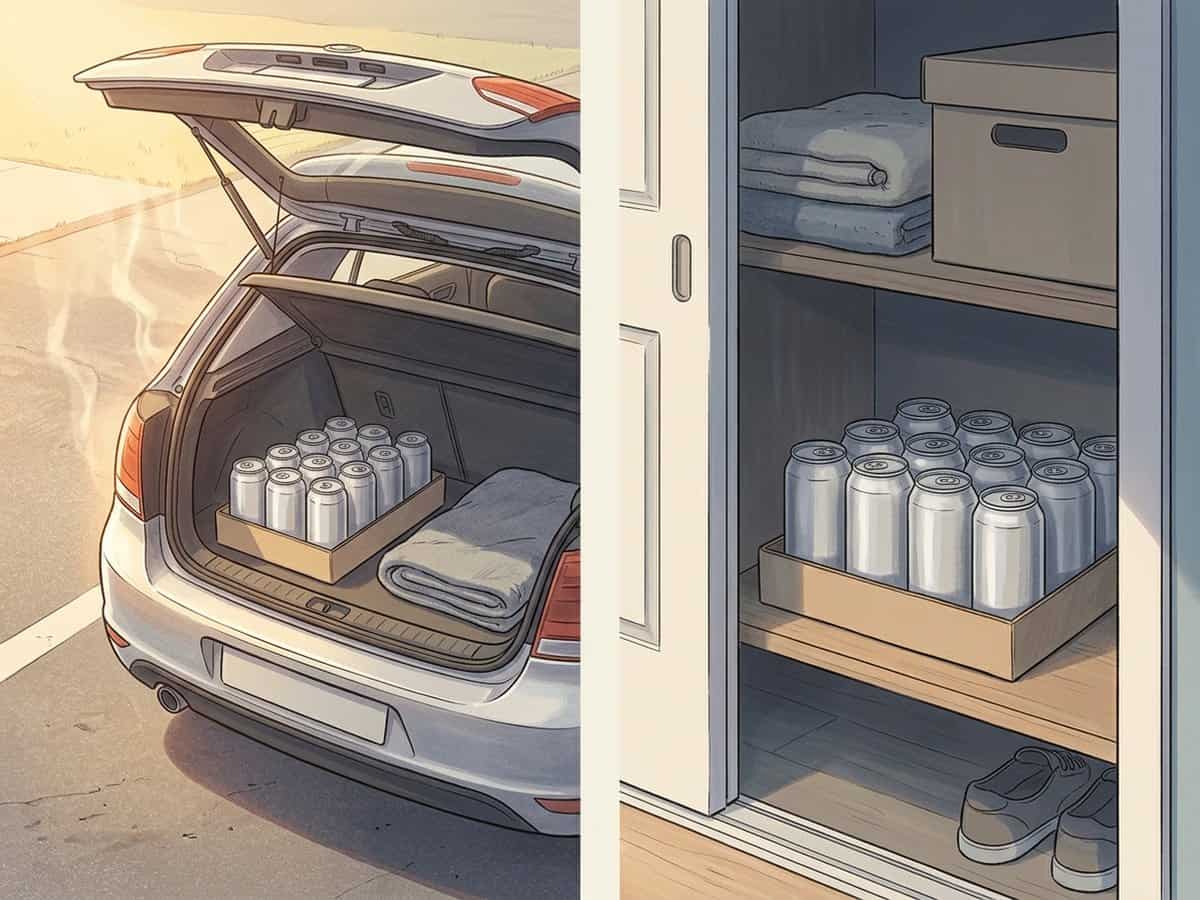
Ready.gov’s water page adds how to keep it: “Buy commercially bottled water and store it in the sealed original container in cool, dark place.” The CDC gives the numbers for that place: a cool temperature of 50°F to 70°F, away from direct sunlight, and away from toxic substances such as gasoline or pesticides.
No agency page checked here sets a shelf life for sealed water. The printed date is therefore the maker’s, and it is the date to follow.
Try it
How much emergency drinking water to buy for your household
The amount of emergency drinking water to buy is people times days times the daily amount, divided by the size of one can, pouch, bottle or carton.
Sealed water for your household
Pick a format and enter the best-by date printed on the pack. The storage allowance covers drinking and sanitation; the fluid figure covers drinking only.
How this is worked out. Units is people × days × daily fluid ounces ÷ unit size, rounded up. The 128 fl oz basis is the CDC and Ready.gov allowance of 1 gallon per person per day; the 96 fl oz basis is Ready.gov’s figure of about ¾ of a gallon of fluid a day for a normally active person. Weight is gallons × 8.329 pounds (USGS). The replace-by date is the date you enter, because the CDC says to observe it. The order date one month earlier is this page’s planning margin, not an agency rule.
What it will not do. It adds nothing for heat, children, nursing mothers, illness or pets; Ready.gov says needs can be higher without publishing a figure, and can double in very hot temperatures. It does not guess a best-by date for you: read the one on the pack.
The products
The emergency drinking water products checked at the manufacturer
Three emergency drinking water products were checked against the maker’s own documentation in September 2026, and each card prints only what that maker states.
Can
Open Water still water, 12 oz cans
- Size: “12oz Cans–Still Water” Stated
- Can: “100% Recyclable BPA free aluminum cans” Stated
- Lining: “Open Water’s cans and bottles all use a BPA-free lining” Stated
- Best-by: “We recommend a ‘best by’ date of 2 years (this is not an expiration date)” Stated
- Storage temperature: “ambient storage temp of 33–93F” Stated
- Water: “Purified with hydrating electrolytes” Stated
- Cans per gallon: about 10.7; one can holds about 0.78 lb of water Calculated
View Open Water canned water on Amazon
Affiliate link. The maker’s temperature range is wider than the CDC’s 50°F to 70°F; store to the narrower CDC range. The maker’s FAQ also attributes a shelf-life statement to the FDA; this page does not print it, because the FDA bottled-water page checked for this site says nothing about shelf life.
Pouch A
S.O.S. Emergency Drinking Water pouch
- Size: “4.2 fluid oz (125 ML)” Stated
- Per case: “96 pouches per case” Stated
- Shelf life: “5-year shelf life” Stated
- Approval: “USCG Approval # 160.026/65/0” Stated
- Temperature: “Withstands temperature range of -22ºF to +149ºF” Stated
- One case holds: about 3.2 gallons, or about 3 person-days at 1 gallon a day Calculated
View S.O.S. emergency water pouches on Amazon
Affiliate link. Confirm the listing is the case size you intend.
Pouch B
Mayday Pouch Water, product 73011
- Size: “4.225 ounce pouches” Stated
- Per case: “carton of 100” Stated
- Shelf life: “5 year shelf life” Stated
- Standard: “Complies with ISO 18813:2022” Stated
- Coast Guard approval: Not stated by the manufacturer. Not stated
- One case holds: about 3.3 gallons, or about 3 person-days at 1 gallon a day Calculated
View Mayday emergency water pouches on Amazon
Affiliate link. The manufacturer page checked here does not state a Coast Guard approval, so this page does not print one.
Carton
Boxed emergency water
Boxed emergency water is sold in paperboard cartons under several brands. No boxed-water maker’s documentation has been checked yet, so this page prints no brand, shelf life or link.
How these cards were built. Each card quotes the maker’s own pages, listed in the sources. Anything a maker does not state is printed as “not stated by the manufacturer.” There is no side-by-side table because the makers do not publish the same attributes. Best-by dates and shelf lives are the makers’ claims, not agency figures.
Pouches get a fuller comparison, including how many a go-bag needs, in best emergency water pouches for preparedness kits. What a printed date on bottled water means is covered in does bottled water expire.
The exclusions
Who sealed emergency drinking water is not for
Sealed emergency drinking water is the wrong tool for anyone storing more than a few days of water, or for anyone who wants the lowest cost per gallon.
- Not for you if you are storing two weeks for a household. A family of four needs 56 gallons for 14 days at the CDC allowance, about 598 twelve-ounce cans (calculated). Refillable containers carry that volume in far fewer units.
- Not for you if the goal is the lowest cost per gallon. Compare price per gallon on the listing: divide the price by the gallons in the pack.
- Not for you if the only place you have is a hot garage, attic or car. Every format here asks for a cool, dark spot; the CDC range is 50°F to 70°F.
- Not for you if you need water for cooking and washing in volume. Small sealed units are drinking servings.
For the larger supply, the container guide compares refillable formats: best emergency water storage containers. For household quantities, use the emergency water storage calculator. A short-notice option for a storm warning, bathtub emergency water storage, is covered separately.
Questions
Common questions about emergency drinking water
Short answers to what people ask before buying sealed emergency drinking water.
No agency page checked here sets a shelf life for sealed water. The CDC’s instruction for store-bought water is to observe the expiration date. Open Water, the canned water checked on this page, recommends a best-by date of 2 years and says this is not an expiration date. Follow the date printed on the can.
Canned water is sealed commercial water, and how long it keeps is set by the maker’s printed date, which for the can checked here is 2 years. For a supply measured in weeks, refillable containers are usually more practical.
The CDC names unopened, commercially bottled water as the safest and most reliable source in an emergency. The right format depends on the job: pouches for kits, cans or bottles for a shelf, refillable containers for bulk.
At 12 fluid ounces a can, one gallon is about 10.7 cans, calculated. The CDC allowance is at least 1 gallon per person per day for 3 days, so one person needs 32 cans for 3 days, rounded up.
Boxed water sealed for sale counts as bottled water under the FDA definition, which covers water sealed in bottles or other containers. This page has not checked a boxed-water maker’s documentation, so it prints no shelf life. Read the best-by date on the carton and store it cool and dark.
The CDC’s general guidance is to store water between 50°F and 70°F, out of direct sunlight, and a parked car often falls outside that range. Follow the maker’s own storage statement for any product kept in a vehicle, and rotate car kits more often than a closet supply.
Sources
Where these facts come from
Agency figures and manufacturer statements, each checked in September 2026.
- Centers for Disease Control and Prevention, “How to Create and Store an Emergency Water Supply” (reviewed June 27, 2025). cdc.gov — unopened, commercially bottled water is the safest and most reliable source; 1 gallon per person per day for 3 days; a 2-week supply if possible; observe the expiration date for store-bought water; 50°F–70°F, out of direct sunlight, away from gasoline or pesticides. Checked September 2026.
- Ready.gov, “Water.” ready.gov — store commercially bottled water in the sealed original container in a cool, dark place; about ¾ gallon of fluid daily for a normally active person; needs can double in very hot temperatures; children, nursing mothers and sick people may need more. Checked September 2026.
- U.S. Food and Drug Administration, 21 CFR 165.110, “Bottled water.” ecfr.gov — bottled water is water intended for human consumption and sealed in bottles or other containers. Checked September 2026.
- U.S. Geological Survey, “Water Density.” usgs.gov — 8.329 lb per gallon. Checked September 2026.
- Open Water, FAQ. drinkopenwater.com — best-by recommendation of 2 years, not an expiration date; ambient storage temperature 33–93F; BPA-free lining. And “12oz Cans–Still Water” product page, drinkopenwater.com — 100% recyclable BPA free aluminum cans, purified with hydrating electrolytes. Checked September 2026.
- SOS Food Lab, “Emergency Water Pouch” spec sheet. sosfoodlab.com — 4.2 fl oz (125 mL), 96 pouches per case, 5-year shelf life, USCG Approval # 160.026/65/0. And “Emergency Water” page, sosfoodlab.com — withstands -22ºF to +149ºF. Checked September 2026.
- Mayday Industries, “73011 Mayday Pouch Water (Case of 100).” maydaysupplies.com — carton of 100 4.225 ounce pouches, 5 year shelf life, complies with ISO 18813:2022. Checked September 2026.