Emergency Water Storage
Emergency Water Storage Mistakes to Avoid
Stored water usually fails quietly: too little, in the wrong room, in the wrong container, or long past its replace-by date. Each mistake below comes with the published rule that prevents it.
The most common emergency water storage mistakes are storing less than 1 gallon per person per day for at least 3 days, keeping water somewhere hot, sunny or near gasoline or pesticides, reusing containers that held toxic chemicals, not replacing home-filled water every 6 months, contaminating it while pouring, filling containers too heavy to move, and assuming boiling makes any water safe (CDC, Ready.gov, EPA).
What you’ll learn
The short version
Emergency water storage mistakes fall into seven groups, and each is fixed by one published rule rather than by buying anything new.
- Quantity: at least 1 gallon per person per day for 3 days, and a 2-week supply if possible (CDC).
- Location: 50°F to 70°F, out of direct sunlight, away from gasoline and pesticides (CDC).
- Containers: food-grade, tightly closing, not glass, and never one that held a toxic chemical (CDC).
- Rotation: replace home-filled water every 6 months; follow the printed date on bottled water (CDC).
- Handling: never touch the water or the inside of the container (CDC).
- Weight: 8.329 pounds per gallon (USGS). Size containers to your strength.
- Treatment: boiling and disinfection do not remove salts, metals or most chemicals (EPA).
Mistake 1
Storing too little water
Storing too little water is the most common emergency water storage mistake, and it usually comes from counting drinking water only.
The CDC says to store at least 1 gallon of water per person, per day, for 3 days, and to try for a 2-week supply if possible. Ready.gov gives the same gallon and says what it is for: drinking and sanitation, for several days.
Ready.gov puts a normally active person at about ¾ of a gallon of fluid a day. Plan to that number, or to a remembered “eight glasses”, and you start one-fourth short. A family of four needs 12 gallons for 3 days and 56 gallons for 2 weeks (calculated).
Heat. Ready.gov states that in very hot temperatures, water needs can double. Size a hot-climate supply for that case.
People who need more. Ready.gov says children, nursing mothers and sick people may need more water, and the CDC suggests storing more for pregnant women, people who are sick, pets and hot climates. Neither publishes an amount per group, so add a margin.
Do not ration. Planning to stretch a small supply by drinking less is a related mistake. Ready.gov: “Never ration drinking water unless ordered to do so by authorities.” Store more instead.
The emergency water calculator multiplies it out, and how much emergency water your family needs explains each adjustment.
Mistake 2
Keeping water in the wrong room
Keeping emergency water in a hot, sunny or chemical-filled space is a storage mistake that the CDC’s three location rules are written to prevent.
The CDC says to keep containers somewhere cool, between 50°F and 70°F, away from direct sunlight, and away from toxic substances such as gasoline or pesticides. The garage often breaks all three rules at once: it heats up in summer, lets in sun, and holds the lawn fuel and pesticides.
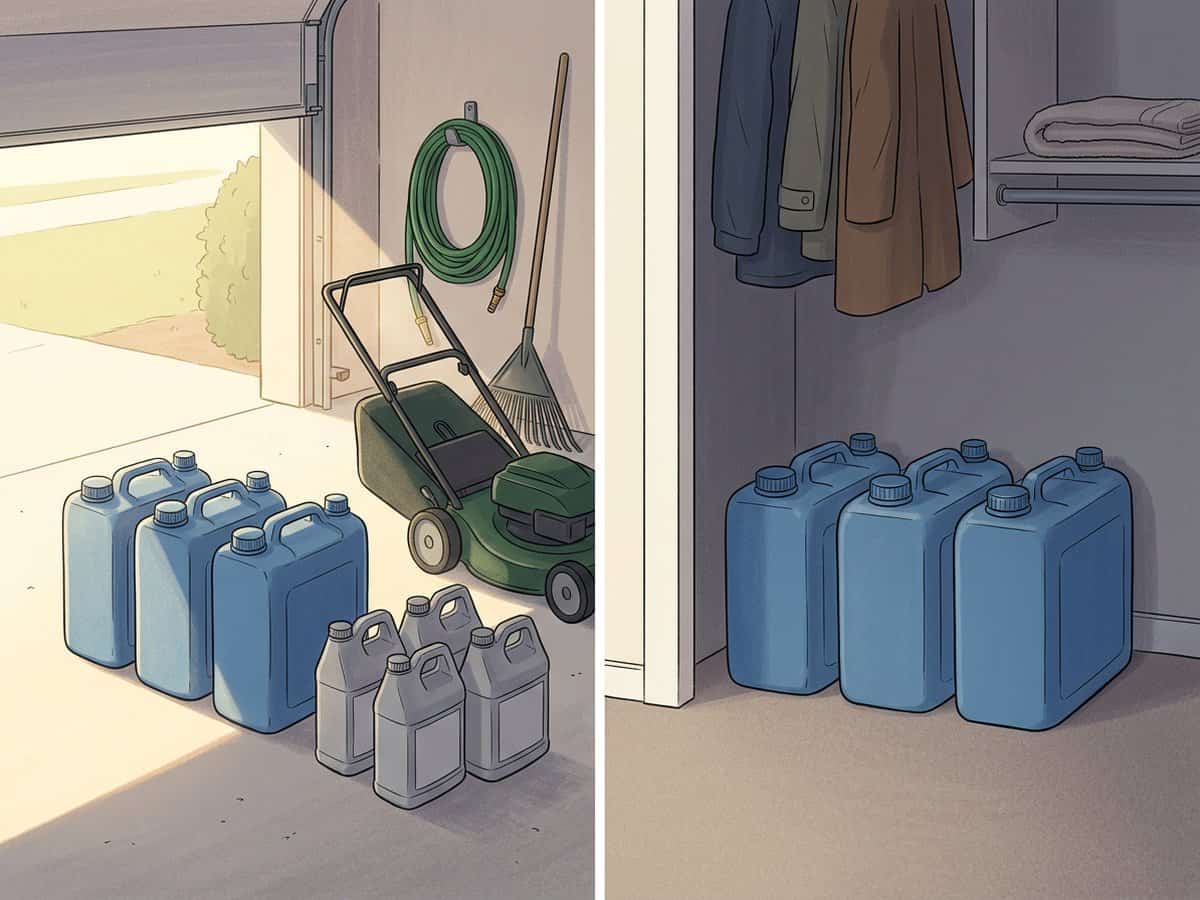
| Spot | 50°F–70°F | Out of direct sunlight | Away from fuel and pesticides |
|---|---|---|---|
| Interior closet floor | Usually | Usually | Usually |
| Under a bed | Usually | Usually | Usually |
| Under the kitchen sink | Usually | Usually | Only if cleaning products move out |
| Uninsulated garage | Often not in summer | Depends on windows and doors | Often not |
If the garage is your only space, use a shaded corner and move the chemicals away from the water. Short on room? See emergency water storage for apartments and small spaces.
Mistake 3
Using the wrong container
Using a container that once held chemicals, or one that breaks or leaks, is an emergency water storage mistake that cleaning does not reliably fix.
The CDC recommends FDA-approved food-grade water storage containers and draws a hard line: do not use containers that previously held liquid or solid toxic chemicals, such as bleach or pesticides. A good container has a tightly closing top, is made of durable, unbreakable materials (not glass), and ideally has a narrow neck for pouring.
Avoid
Containers that cause trouble
- Anything that held a toxic chemical, including a used drum with an unknown past (CDC).
- Glass, which the CDC excludes.
- Milk and juice jugs: the Regional Water Providers Consortium, a group of Oregon and Washington utilities, says milk protein and fruit sugars cannot be adequately removed.
- Anything with a loose, cracked or missing cap.
Use
Containers that do the job
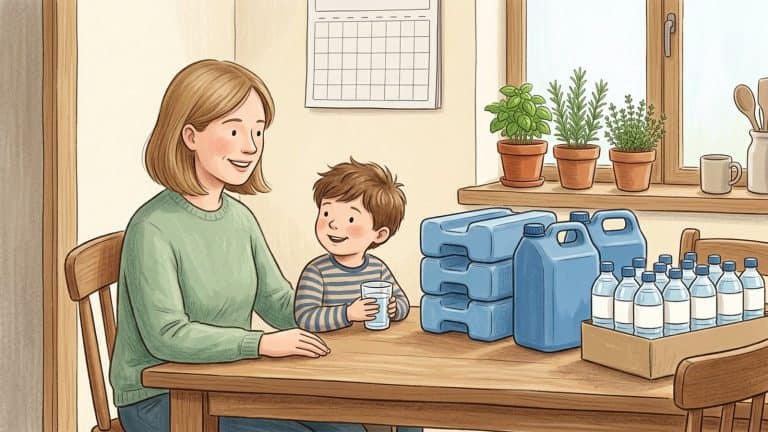
- Unopened commercial bottled water, which the CDC calls the safest and most reliable emergency source.
- Food-grade water storage containers (CDC, Ready.gov).
- A size you can lift when it is full (see mistake 6).
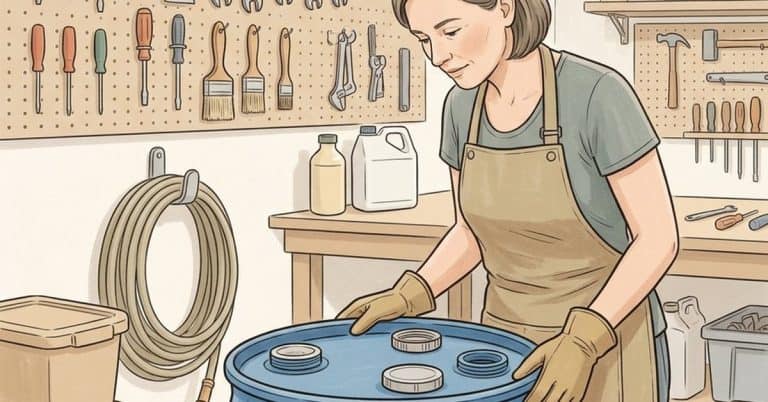
Second-hand drums are the classic trap: their history is usually unknowable, and the CDC’s rule does not bend for a rinse. See used 55-gallon barrels for water storage, or compare new formats in the water storage container guide.
For cleaning a container before its first fill, follow the current CDC page; this page prints no ratios, no measures and no timings.
Mistake 4
Forgetting to rotate stored water
Forgetting to rotate stored water is an emergency water storage mistake that only shows up on the day you need the water.
Two rules apply, and mixing them up is part of the mistake. Home-filled water is replaced every 6 months (CDC; Ready.gov). Store-bought water follows its printed expiration date (CDC) and stays sealed in its original container in a cool, dark place (Ready.gov).
| Water | Rule | Source |
|---|---|---|
| Filled yourself from the tap | Replace every 6 months | CDC; Ready.gov |
| Sealed commercial bottles | Observe the printed expiration date; keep sealed, cool and dark | CDC; Ready.gov |
| Opened bottles | No agency rule; this site treats them as everyday drinks, not storage | Judgment, labelled as such |
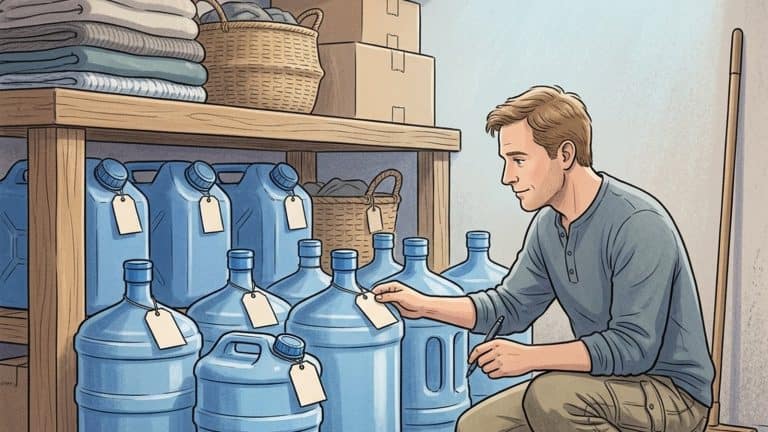
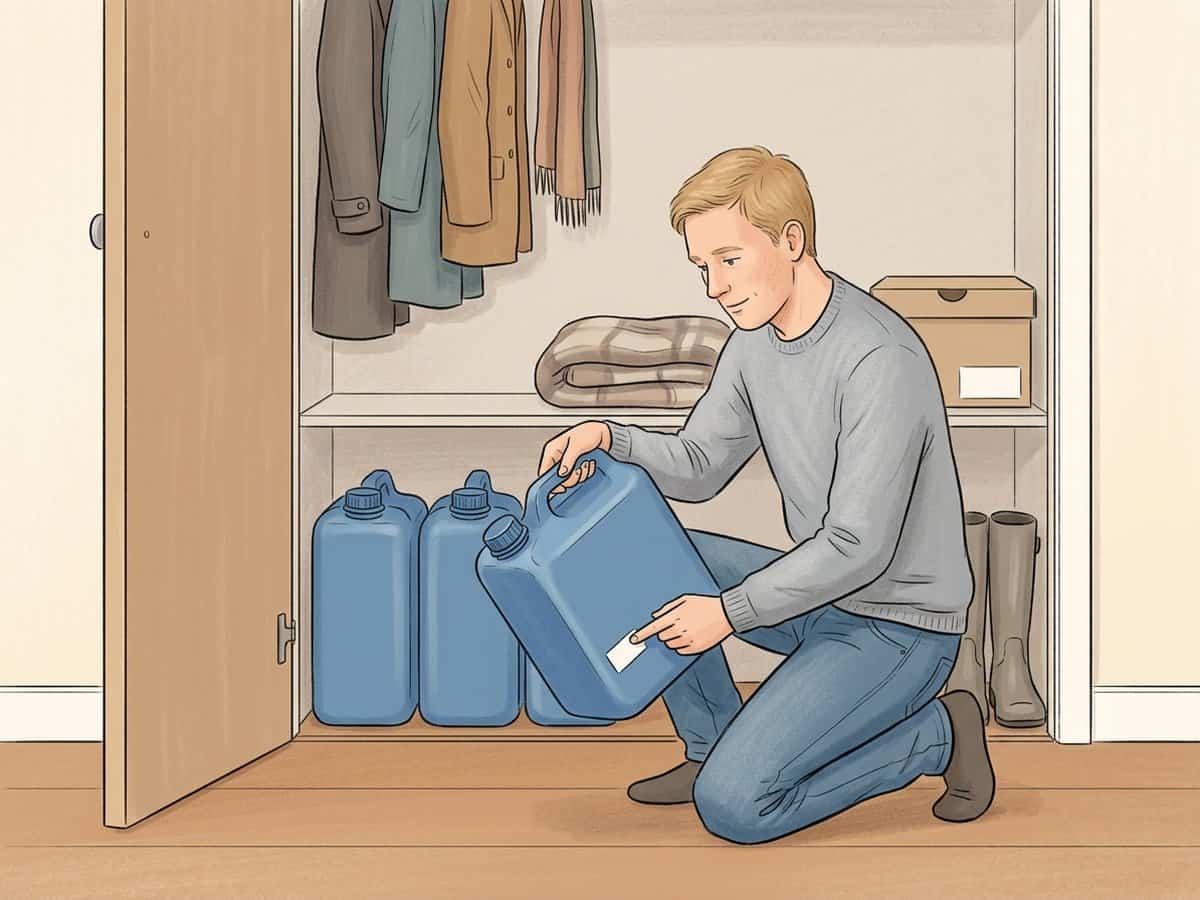
The CDC also says to label each container “drinking water” with its storage date. Without that label the 6-month rule is unworkable: nobody remembers when an unmarked jug was filled.
Write the fill date where you can read it without moving the container, and keep home-filled and store-bought water apart. The water storage rotation schedule builds the dates; how long emergency water can be stored and whether bottled water expires explain each rule.
Mistake 5
Contaminating the water while you use it
Contaminating stored water at the moment of use is an emergency water storage mistake that undoes months of careful storage in a few seconds.
The CDC says to use a clean scoop or other device each time you take water out, not to touch the water or the inside of the container with your hands, and not to scoop water out with your hands. The Regional Water Providers Consortium adds: do not touch the inside of the cap with your fingers.
Pour, don’t dip. A narrow neck or spout (a CDC-listed feature) lets you pour instead of reaching in.
A clean scoop, every time. Never set it down on a counter between uses.
Caps face up. Rest a cap inside-up on a clean surface; fingers off the inner rim.
Close it again. An open container is no longer sealed storage.
For a barrel too heavy to tip, a pump rated for drinking water keeps hands out entirely; see the 55-gallon barrel kit guide.
Mistake 6
Filling containers too heavy to move
Filling containers too heavy to lift is an emergency water storage mistake that shows up only when the water has to be moved or poured.
The U.S. Geological Survey gives 8.329 pounds for a U.S. gallon of water at 70°F. A 5-gallon jug therefore holds about 41.6 pounds of water, and a full 55-gallon barrel about 458 pounds, before the container’s own weight (calculated).
Weight of the water alone, by container size
Bars scaled to a full 55-gallon barrel. Each figure is gallons × 8.329 pounds (USGS); container weight is not included.
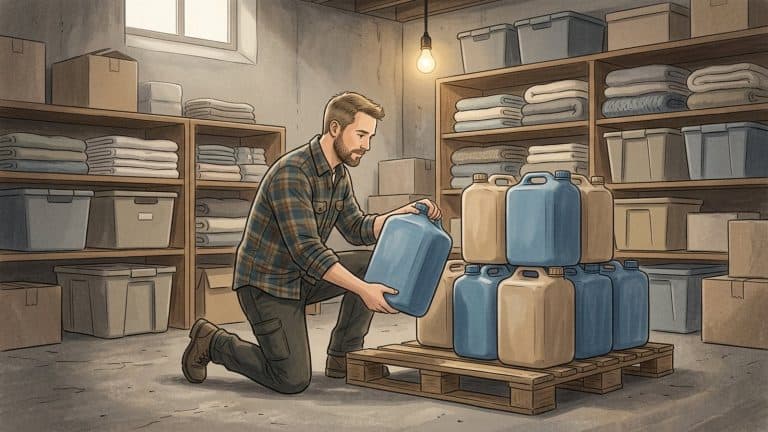
The mistake takes three forms: one huge container that cannot be carried, tipped or taken if you leave; water stored a flight of stairs from where it is used; and containers sized to the strongest adult, who may not be home.
A mix works better: small containers anyone can carry, plus a larger supply filled in place at ground level. The stackable container guide shows what a stack of mid-sized containers weighs and how much floor it takes.
Mistake 7
Assuming boiling makes any water safe
Assuming boiling or disinfection makes any water safe is an emergency water storage mistake, because both methods work on germs and neither removes chemical contamination.
Three kinds of water need three answers. Properly stored water is ready to use. For water that may carry germs, the EPA states that boiling is sufficient to kill pathogenic bacteria, viruses and protozoa. For fuel, chemicals or salts, the EPA states that boiling or disinfection will not destroy other contaminants, such as heavy metals, salts and most other chemicals.
Stored safely
01
Your own supply
Food-grade, in date, stored cool and handled cleanly. Use it as it is.
Germs
02
A microbial risk
Tap water under an advisory. Follow the EPA and your utility.
Chemicals
03
Fuel, chemicals or salt
Floodwater or anything near spilled fuel. Boiling does not fix it; use another source.
Follow local instructions first. The EPA notes that during an emergency, local authorities may recommend using only bottled water, boiled water or disinfected water until regular service is restored. If the water may contain fuel, chemicals, salts, or other non-microbial contamination, do not assume boiling or disinfection makes it safe.
This page covers storage, not treatment, so it gives no treatment method; use the EPA’s current page. A good storage plan is what spares you from treating water at all.
Your turn
Check your own supply for these mistakes
The quickest way to find emergency water storage mistakes at home is to tick only the published rules your supply already meets.
Emergency water self-check
Tick what is true today. Anything unticked stays on the fix list.
What to fix next
- Quantity: 1 gallon per person per day, 3 days minimum (CDC).
- Margin: heat, illness, children, pregnancy, pets.
- Location: a cool, dark interior spot.
- Separation: move fuel and chemicals away.
- Containers: replace any of doubtful history.
- Rotation: date labels and a 6-month reminder.
- Handling: a spout or a clean scoop.
- Weight: smaller containers anyone can carry.
Nothing left on the list. Put the next 6-month check on your calendar.
How this is worked out. Each statement restates one rule cited above (CDC, Ready.gov, USGS). The score counts your ticks out of 8. It is a checklist, not a safety rating.
What it will not tell you. Whether any particular supply is safe to drink during an emergency; local officials and your water utility decide that.
Nothing is saved or sent. For the whole household plan, start from the complete emergency water storage guide.
Questions
Common questions about emergency water storage mistakes
These are the questions people ask most often when they check an emergency water supply for mistakes.
Storing too little is the most common mistake. The CDC says to store at least one gallon per person per day for three days, and a two-week supply if possible. That gallon covers drinking and sanitation, so planning around drinking water alone leaves a household short before heat, illness or pets are counted.
Milk jugs are a poor choice. The Regional Water Providers Consortium advises against milk and juice containers because milk protein and fruit sugars cannot be adequately removed. The CDC recommends food-grade water storage containers with tight-closing tops, made of durable, unbreakable materials.
Often not. The CDC says to store water between 50°F and 70°F, out of direct sunlight, and away from toxic substances such as gasoline or pesticides. Many garages fail all three. If a garage is your only option, choose a shaded spot and move fuel and chemicals away from the water.
Replace water you filled yourself every six months, according to both the CDC and Ready.gov. For sealed, store-bought water, the CDC says to observe the expiration date printed on it. Labelling each container with its fill date is what makes the six-month rule possible to follow.
Boiling kills germs but does not remove chemicals. The EPA says boiling is sufficient to kill pathogenic bacteria, viruses and protozoa, and that boiling or disinfection will not destroy other contaminants such as heavy metals, salts and most other chemicals. Water that may contain fuel or chemicals needs a different source.
No. Ready.gov says never to ration drinking water unless ordered to do so by authorities. Drink what you need and look for more water. The better way to make a supply last is to store enough before an emergency begins.
Sources
Where these rules come from
Every rule on this page is quoted or paraphrased from one of these sources, checked in September 2026.
- Centers for Disease Control and Prevention, “How to Create and Store an Emergency Water Supply” (reviewed June 27, 2025). cdc.gov — at least 1 gallon per person per day for 3 days; a 2-week supply if possible; store more for pregnant women, sick people, pets and hot climates; unopened commercially bottled water as the safest and most reliable source; observe the expiration date; FDA-approved food-grade containers; never containers that held toxic chemicals such as bleach or pesticides; tight-closing top, durable unbreakable materials (not glass), narrow neck; label “drinking water” with the storage date; 50°F–70°F, away from direct sunlight and from gasoline or pesticides; replace every six months; clean scoop each time, no hands in the water or container. Checked September 2026.
- Ready.gov, “Water.” ready.gov — at least 1 gallon per person per day for several days, for drinking and sanitation; about ¾ gallon of fluid a day for a normally active person; needs can double in very hot temperatures; children, nursing mothers and sick people may need more; never ration drinking water unless ordered by authorities; keep bottled water sealed in the original container in a cool, dark place; replace water that was not commercially bottled every six months. Checked September 2026.
- U.S. Environmental Protection Agency, “Emergency Disinfection of Drinking Water” (updated February 24, 2026). epa.gov — local authorities may recommend only bottled, boiled or disinfected water; boiling kills pathogenic bacteria, viruses and protozoa; boiling or disinfection will not destroy heavy metals, salts and most other chemicals. Checked September 2026.
- U.S. Geological Survey, “Water Density.” usgs.gov — 8.329 pounds per U.S. gallon at 70°F, used for every weight on this page. Checked September 2026.
- Regional Water Providers Consortium (Oregon and Washington utilities), “Emergency Water Storage.” regionalh2o.org — avoid milk and juice containers; do not touch the inside of the cap. A regional utility source, cited for container and handling detail only. Checked September 2026.