Container Comparison
Best Water Storage Containers for Emergencies and Long-Term Storage
Every roundup prints the same copied specifications. I went to the manufacturers instead. Here’s what they publish, what they quietly don’t, and how I’d choose.
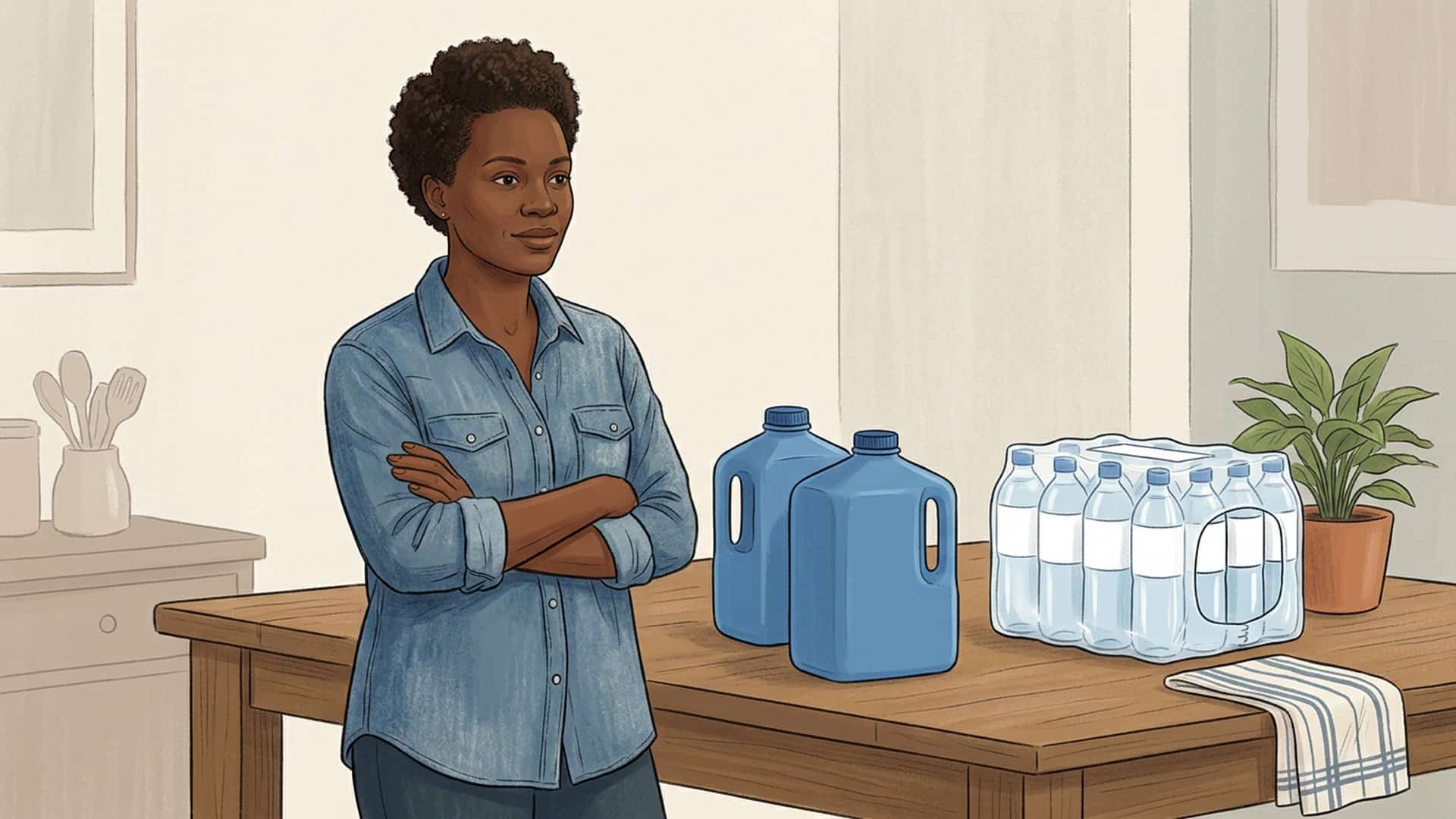
Two formats cover most households: stackable interlocking bricks and portable rigid jugs. Capacity almost never decides it — floor space and lifting weight do. A filled 3.5-gallon brick holds about 29.2 lb of water, a filled 5-gallon jug about 41.6 lb, calculated from the USGS figure of 8.329 lb per gallon.
Emergency Water Source participates in the Amazon Services LLC Associates Program. If you buy through a link here I may earn a commission at no extra cost to you. It does not change which containers appear on this page, and no price, rating, review count or availability claim appears anywhere on it.
The short version
If you read nothing else
Both formats are rigid plastic containers in the three-to-five gallon range; footprint, handling weight and how much the maker publishes are what separate them.
- Capacity is the least useful number on the box. A gallon and a half separates these two, and they behave nothing alike.
- A filled 3.5-gallon brick comes to about 31.7 lb. The jug’s all-in weight can’t be calculated: its maker publishes no empty weight.
- “Not stated by the manufacturer” means the figure isn’t published, not that the product lacks the property.
The comparison
Stackable brick vs portable jug, specification by specification
The stackable brick publishes almost everything a buyer needs. The jug publishes capacity, material and BPA status, and the rest of its column is honest silence.
| Attribute | Stackable brick (WaterBrick Standard 3.5 gal) | Portable jug (Scepter 5 gal / 20 L water can) |
|---|---|---|
| Capacity | “3.5 gallon container”Stated | “5 gallon / 20 litre”Stated |
| Materials | “HDPE (High Density Polyethylene resin)”; lid “High Density Polypropylene”; gasket “Dynaflex TPE”Stated | “Made of rugged HDPE”Stated |
| BPA status | “BPA free”Stated | “BPA-free construction”Stated |
| Food-contact compliance | “FDA compliant materials in order to store water and food”Stated | Not stated by the manufacturer.Not stated |
| Exterior dimensions | “9″ Width, 18″ Length, 6″ Height”Stated | Not stated by the manufacturer.Not stated |
| Floor footprint | About 1.13 sq ft — 9 × 18 in = 162 sq in, ÷ 144Calculated | Not stated by the manufacturer, so not calculable.Not stated |
| Empty weight | “Weight Empty – 2.52 pounds”Stated | Not stated by the manufacturer.Not stated |
| Weight when full | Water about 29.2 lb (3.5 × 8.329); with the stated 2.52 lb container, about 31.7 lb.Calculated | Water about 41.6 lb (5 × 8.329); all-in weight not calculable, empty weight not stated.Calculated |
| Opening and dispensing | “Wide Lid Opening,” lid diameter “3¼ inches”Stated | “easy-to-pour flexible spout can be stored inside when not in use”Stated |
| Stacking | Interlocking cross-stack design; “150 can be cross stacked per pallet.” No household stack limit stated.Stated | Not stated by the manufacturer.Not stated |
How this table was built. Every cell is stated by the manufacturer, calculated from a published constant, or the literal words “not stated by the manufacturer.” Never a blank or a dash — in a safety table a blank reads as “no.” Nothing is inferred or carried over from a similar product, and every figure was read at the maker’s own site, not a retailer listing. Nothing here was tested by me, and no price, rating or stock claim appears anywhere.
One absence is worth saying out loud: the jug’s maker publishes no food-grade statement on the page I checked. That isn’t evidence against it, but I won’t print the claim for them.
What decides it
Two questions decide this, and neither is “which is best”
The right container is the one that fits the space you actually have and that you can still move when it’s full.
What stops people isn’t capacity. It’s a closet floor 22 inches deep, a shelf with no load rating, or the quiet realisation that whoever is home when the tap goes out can’t lift forty pounds. Capacity you can add later; space and strength don’t move. So answer two things: where is this going, measured, and who lifts it repeatedly during a bad week? If the volume isn’t settled, start with how much water your household needs.
Before format, there’s a floor. The CDC says to use “FDA-approved food-grade water storage containers” with “a top that can be closed tightly,” made from “durable, unbreakable materials (not glass),” and adds that “a narrow neck or opening” is preferable. That last preference cuts against the wide-lid brick, and I’d rather point at it than leave it out.
The one rule I won’t soften. The CDC states: “Do not use containers that were previously used to hold liquid or solid toxic chemicals, such as bleach or pesticides.” That holds however well it was rinsed. Use only clean, food-grade containers meant for drinking water.
Scope. Containers, not treatment. If your water might be contaminated, see the EPA’s emergency disinfection guidance. General preparedness information, not a substitute for instructions from local officials or your water utility during an active event.
The weight
Forty-one pounds is the number that changed my mind
Water weighs about 8.329 pounds per gallon, so the gap between a 3.5-gallon and a 5-gallon container is roughly twelve and a half pounds in your hands.
I’d treated the 5-gallon as the obvious pick — more water per container sounds like a win. Then I did the multiplication.
Calculated from 8.329 lb per gallon
Filled weight, side by side
Water only — one maker publishes a container weight.
Bars are proportional to the calculated weights above — arithmetic from a published constant, not a specification.
Try it
What would that weigh in your house?
Same arithmetic: people × days × 8.329 lb.
4 people for 3 days needs 12 gallons — about 100 lb of water, in 4 bricks or 3 jugs.
Three days is the CDC baseline of one gallon per person per day; longer windows are my planning judgment, not agency guidance. A planning aid, not a substitute for instructions from local officials during an event.
Settle this before you buy. If lifting forty pounds off the floor isn’t something you can do comfortably and repeatedly, buy smaller units. Needs run higher for infants, children, older adults, pregnancy, illness, pets and hot conditions.
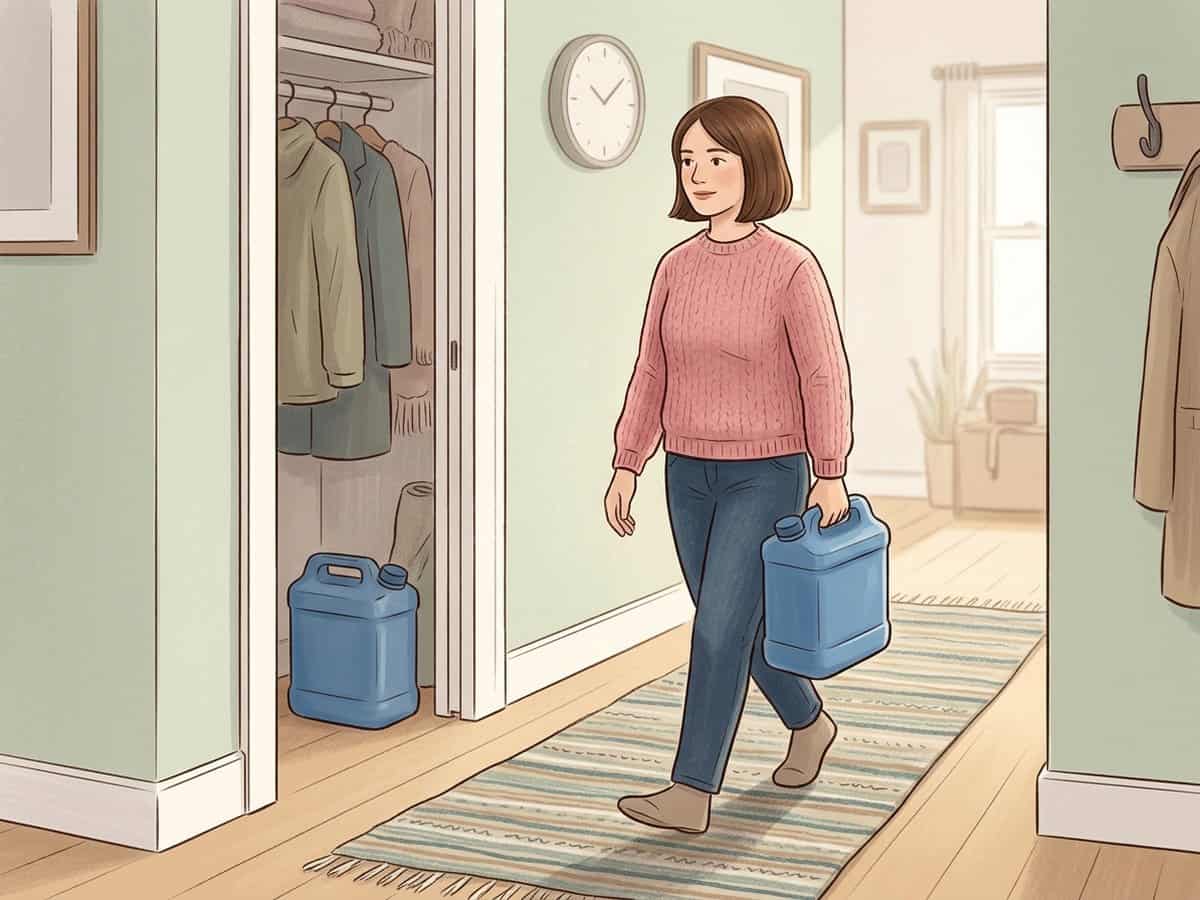
The fit
Who each option fits
Choose the brick when the space is fixed and awkward, the jug when the water has to move, and neither yet if you’re still working out the volume.
01
The closet builder
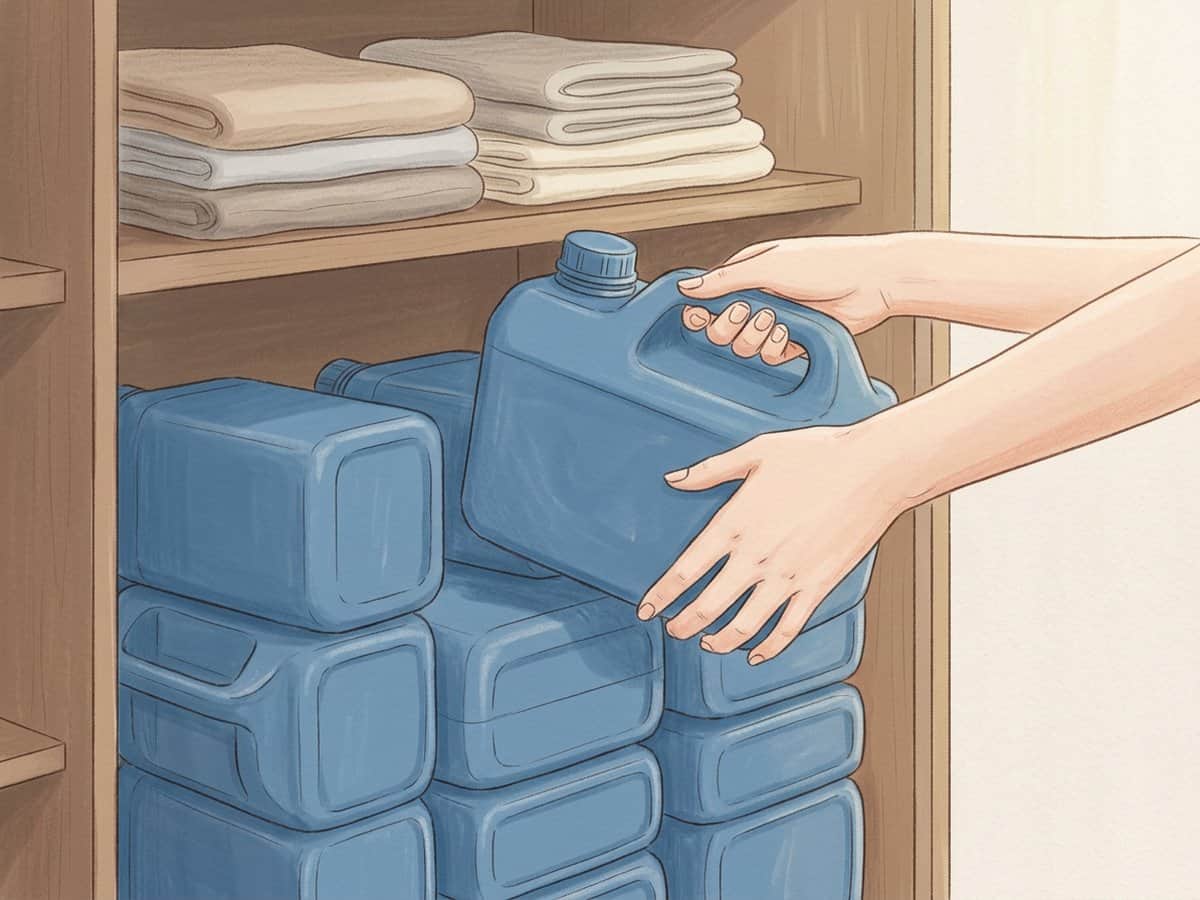
One place for this, and it isn’t generous. Published dimensions let you plan the shelf.
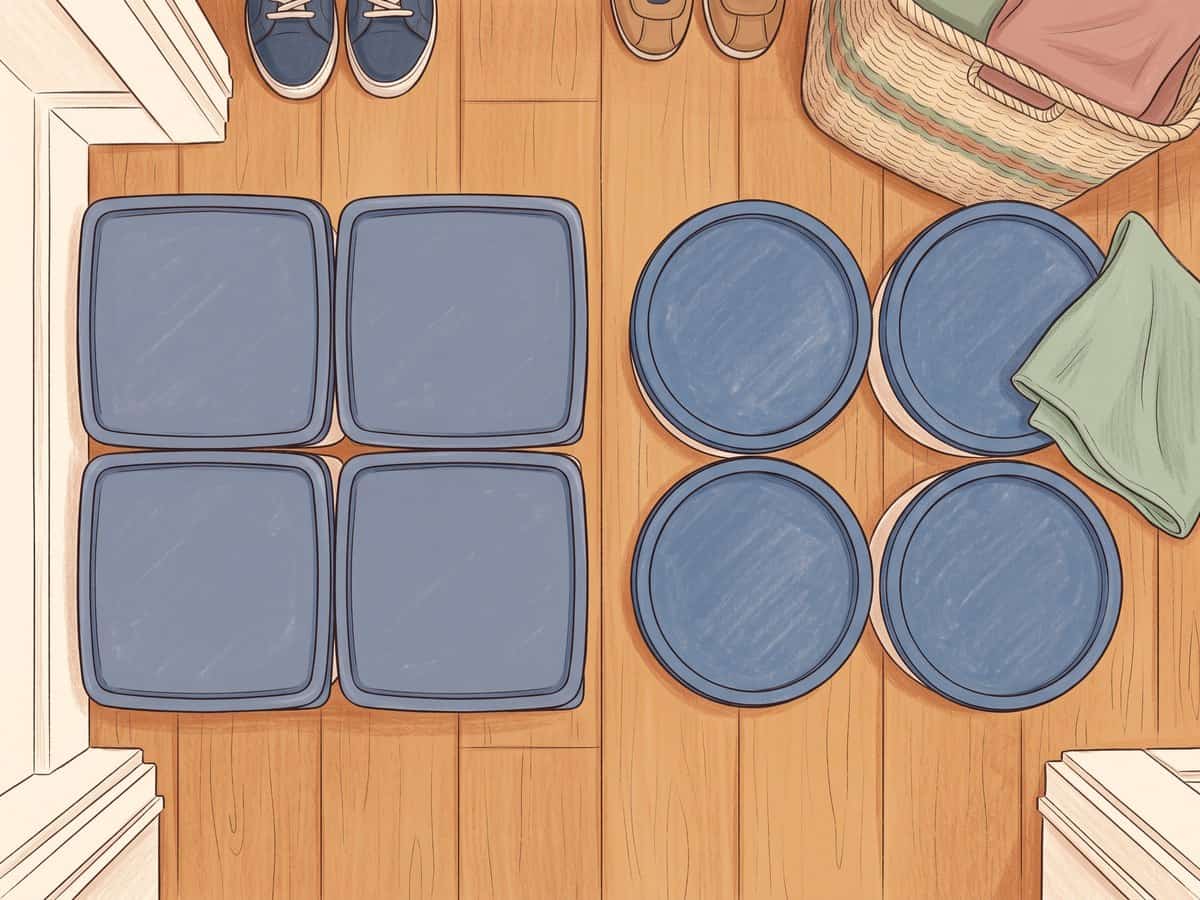
- Rectangular units waste less floor than round ones
- Lighter per container, so more of the household can move one
- Wide lid eases cleaning
02
The one-trip carrier
Your priority is moving water — another floor, a vehicle, a neighbour. A rigid jug with a built-in spout is made for it.
- Spout stores inside the cap; no extra kit to lose
- Tall, narrow shape suits a corner more than a shelf run
- Plan for about 41.6 lb of water per container
03
Neither, for now
The volume isn’t settled, or nobody can handle thirty pounds. Sealed bottled water in small units is a real answer — the CDC calls it the safest, most reliable emergency source.
- Smaller units spread the weight over more trips
- No cleaning, filling or six-month refill cycle
- Settle the volume first, then revisit format
One thing worth saying plainly: nobody buys water storage during the emergency they’re buying it for. You do it on an ordinary Tuesday, or you don’t have it.
The exclusions
Who these are not for
Rigid containers this size are a poor choice for anyone who can’t repeatedly lift thirty to forty pounds, and no design fixes that.
- Not for you if lifting 30 to 42 pounds off the floor isn’t safe and repeatable for you. No prize for storing water you can’t pick up.
- Not for you if your only surface is a shelf with no load rating. Sixteen bricks stacked four by four concentrate roughly 507 pounds onto about 4.5 square feet.
- Not for you if you need a fixed dispensing setup: spigot, pump, stand. Neither is that.
- Not for you if you need a published food-grade statement for the jug. It wasn’t on the manufacturer page I checked.
- Not for you if you move often. Refilling on every move quietly becomes never refilling.
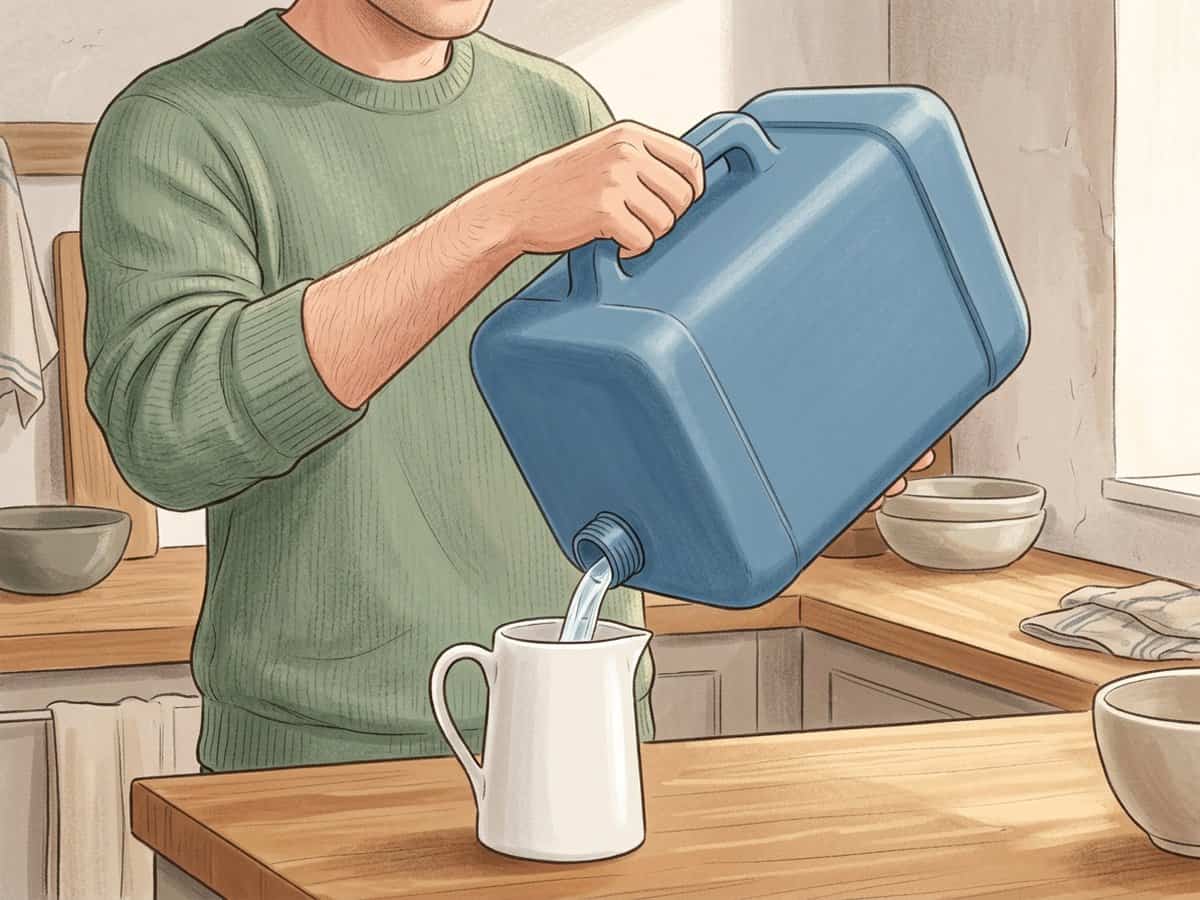
The two containers I compared
Both are affiliate links, as disclosed at the top. I publish no price or rating — check those on the listing and confirm the variant matches what you mean to buy. Cost per usable gallon is the comparison worth making there: divide price by gallons held, then ask whether the cheaper option is one you can lift.
View the WaterBrick Standard 3.5-gallon container on Amazon
View a WaterBrick Standard multi-pack listing on Amazon
The second WaterBrick button is the same 3.5-gallon Standard model in a different Amazon listing; pack size and colour differ between listings, so check the one you pick.
Keep going
Where to go next
Container choice sits in the middle: volume first, then the container, then the rotation habit.
Work the gallons out for your household before buying anything.
The practiceHow to store water long termFilling, labelling, placement and the six-month cycle for home-filled water.
Shelf lifeHow long can emergency water be stored?What the agencies say, and the two things they pointedly do not.
UpkeepRotation schedule and checklistA printable schedule for keeping stored water current.
Questions
Questions people ask
These five decide the purchase, answered from manufacturer documentation and agency guidance.
The brick is a rectangular interlocking box that trades capacity for a predictable footprint; its maker publishes dimensions, empty weight and lid size. The jug is taller, narrower, has a built-in pour spout, and is sold for carrying rather than shelving — its maker publishes capacity and BPA-free HDPE, but no dimensions or weight.
Water weighs about 8.329 pounds per US gallon at 70 degrees Fahrenheit, so a 3.5-gallon container holds about 29.2 pounds of water and a 5-gallon container about 41.6 pounds. Those are calculations, not manufacturer claims. The brick states 2.52 pounds empty, giving roughly 31.7 full; the jug states no empty weight.
The brick’s manufacturer states it uses FDA compliant materials in order to store water and food, and describes it as BPA free. The jug’s manufacturer states BPA-free HDPE but publishes no food-grade statement, so I don’t print one for it. The CDC’s baseline is FDA-approved food-grade containers.
In a small apartment the deciding factor is published dimensions, not capacity, because you’re fitting a container to one specific closet or under-bed gap. The brick publishes 9 by 18 by 6 inches, a calculated footprint of about 1.13 square feet; the jug publishes no dimensions.
Many adults can, but the planning question is whether you can do it repeatedly, from floor height, on a bad week. The water alone is about 41.6 pounds by calculation, and the container adds an unpublished amount. If that is marginal for anyone in your household, use smaller units.
Evidence
Sources
Every safety claim traces to a government source, every specification to manufacturer documentation.
- CDC, “How to Create and Store an Emergency Water Supply” — container requirements, the toxic-chemical prohibition and the three-day baseline. cdc.gov. Checked September 2026.
- Ready.gov, “Water” — the one-gallon-per-person-per-day figure and elevated-need groups. ready.gov. Checked September 2026.
- USGS Water Science School, “Water Density” — 8.329 lb per US gallon at 70 °F, the constant behind every calculated weight here. usgs.gov. Checked September 2026.
- WaterBrick International, “Product Specifications” — capacity, dimensions, empty weight, materials, BPA and FDA-compliant-materials wording, lid diameter, cross-stacking. waterbrick.org. Checked September 2026.
- Scepter, “5 Gallon / 20 Litre Water Can” (product #04933) — capacity, HDPE construction, BPA-free construction, spout design. scepter.com. Checked September 2026.
- EPA, “Emergency Disinfection of Drinking Water” — referenced only as a handoff for water that may need treatment, outside this page’s scope. epa.gov. Checked September 2026.