Sheet set A-01A complete home guideRevised September 2026
Emergency water storage, worked out instead of guessed
How much water to keep, what to keep it in, where to put it and when to change it — every figure traced to the agency that published it, and every calculation shown.
The short answer
Store at least 1 gallon of water per person, per day, and hold at least a 3-day supply — 12 gallons for a household of four. The CDC suggests building to a two-week supply where you have the room. Use clean, food-grade containers, keep them between 50°F and 70°F out of direct sunlight, and replace water you filled yourself every six months.
01 · The whole plan
Six numbers decide everything else
A workable household water supply comes down to six figures: an allowance, a window, a temperature range, a rotation interval, a container standard and a weight.
-
1 gallon
Per person, per day, covering drinking and sanitation together. CDC.
-
3 days
The baseline supply window. Two weeks if you have the room, per the CDC.
-
50–70°F
Cool, dark, out of direct sunlight, away from gasoline and pesticides. CDC.
-
6 months
Replacement interval for water you filled yourself. CDC and Ready.gov agree.
-
Food-grade
FDA-approved containers with tight lids. Never anything that held chemicals.
-
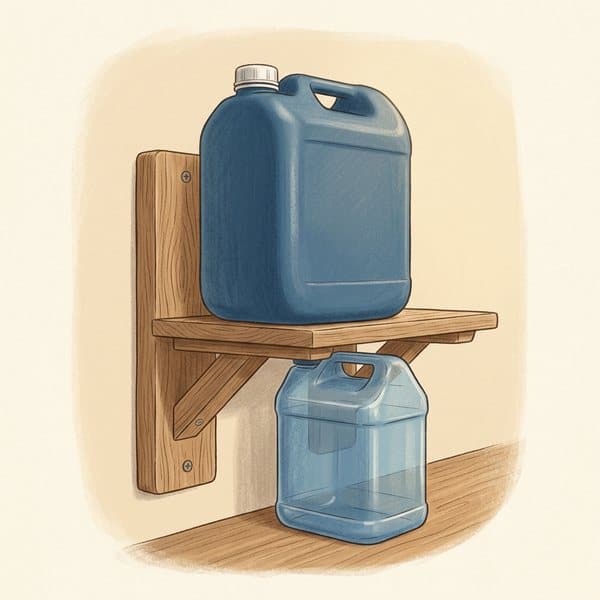
8.329 lb
The weight of one gallon of water at 70°F. USGS. It decides where the supply can live.
02 · Room by room
Where and how to store water at home
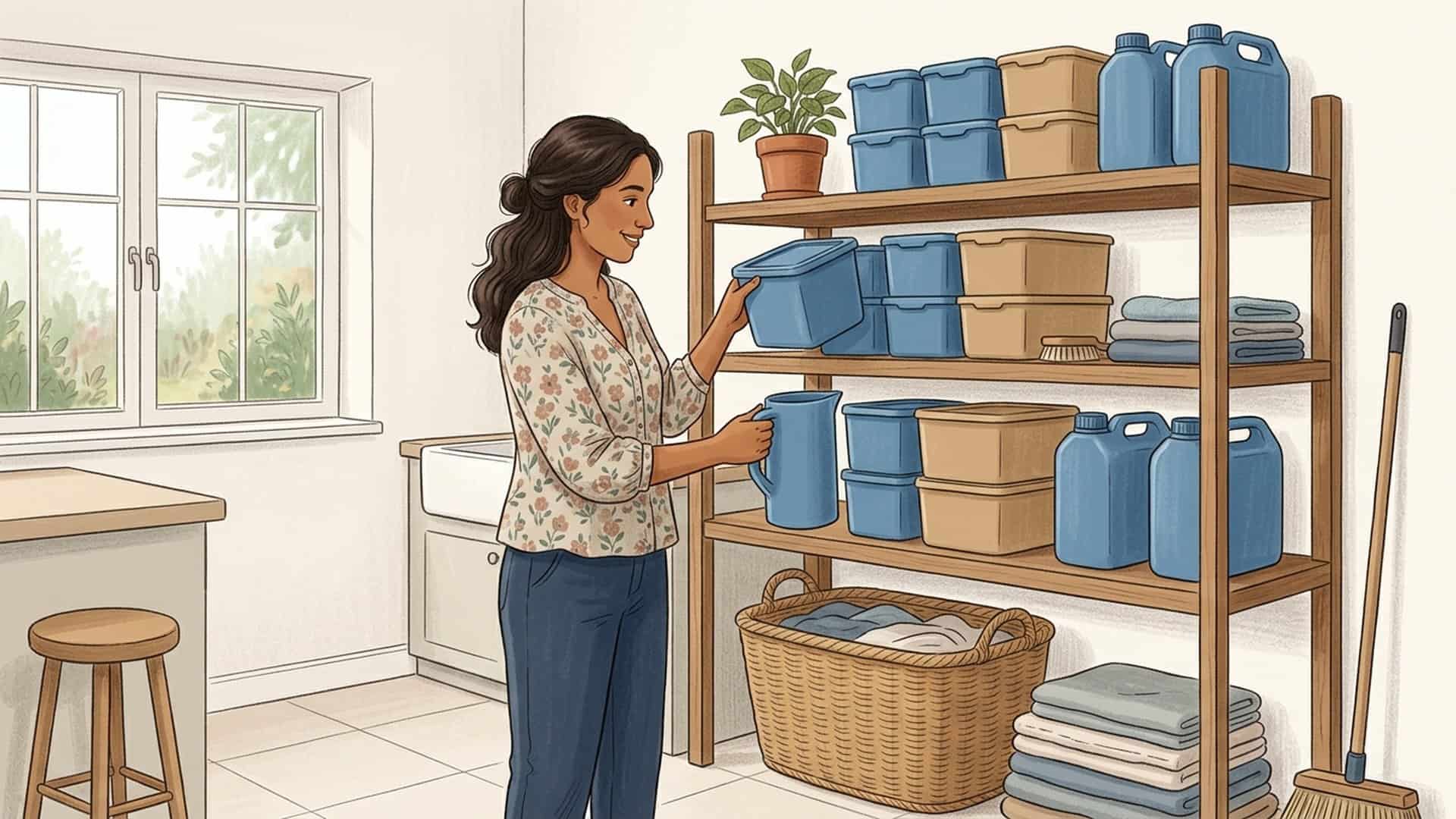
Store emergency water somewhere cool and dark between 50°F and 70°F, out of direct sunlight, and well away from gasoline, pesticides and other chemicals.
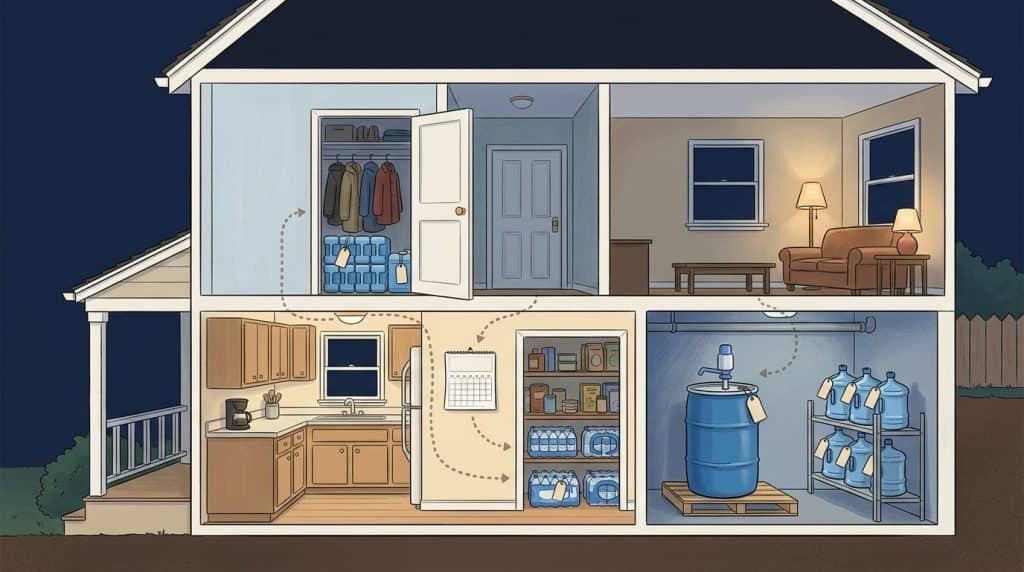
- Inside 50–70°F
- Too warm or sunlit
- Near fuel or chemicals
I · The whole house
Read the house as a temperature map before choosing a shelf. The CDC range is 50°F to 70°F, and most homes have only a few places that stay inside it all year.
II · Attic and window
Attics swing far outside the range, and direct sunlight promotes algae in anything translucent. Both are out, however convenient the space.
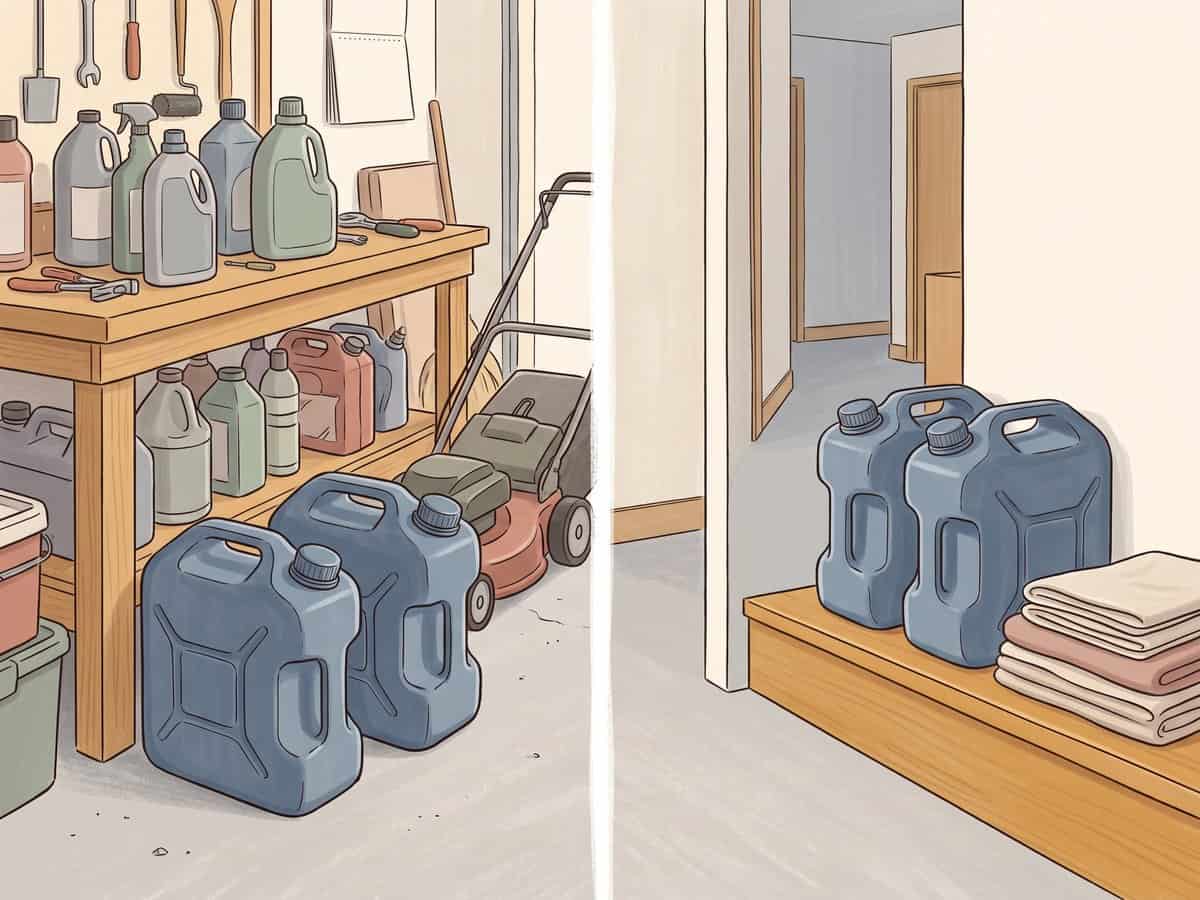
III · The garage shelf
Keep water away from gasoline and pesticides, even when every container is sealed. Vapours from fuels and solvents migrate through plastic over time.
IV · Split it up
What is left is closet floors, under beds and conditioned basements. Spread the supply across them: 56 gallons is about 466 lb, calculated at 8.329 lb per gallon.
V · Date it
Write the fill date on every container you filled yourself, and replace that water every six months, per the CDC.
The CDC gives three placement rules and they are unusually specific: keep containers at a cool temperature between 50°F and 70°F, keep them out of direct sunlight, and keep them away from toxic substances such as gasoline and pesticides.
That rules out more of the average home than it first appears, and leaves interior closet floors, under beds, interior cabinets and conditioned basements — the same list an apartment ends up with, for the same reasons.
03 · The allowance
How much emergency water should you store?
Store at least 1 gallon of water per person per day, and hold at least a 3-day supply — 12 gallons for a household of four.
The CDC states the rule plainly: store at least one gallon of water per person, per day, for three days. That gallon is not all drinking water. It covers drinking and basic sanitation together, which is why the figure looks generous next to what anyone actually drinks, and why splitting it into “eight glasses” misreads it.
The CDC also suggests building toward a two-week supply where storage space allows. Ready.gov adds the adjustments: children, nursing mothers and sick people may need more, a medical emergency may require additional water, and needs can double in very hot temperatures. Neither agency publishes a per-person figure for those groups, so treat the baseline as a floor and add deliberately rather than multiplying by a number nobody sourced.
How the planner works. It uses the CDC allowance and nothing else: people multiplied by days gives gallons, and gallons multiplied by 8.329 gives the filled weight. Both figures are arithmetic, not agency recommendations.
04 · The container standard
The best types of emergency water containers
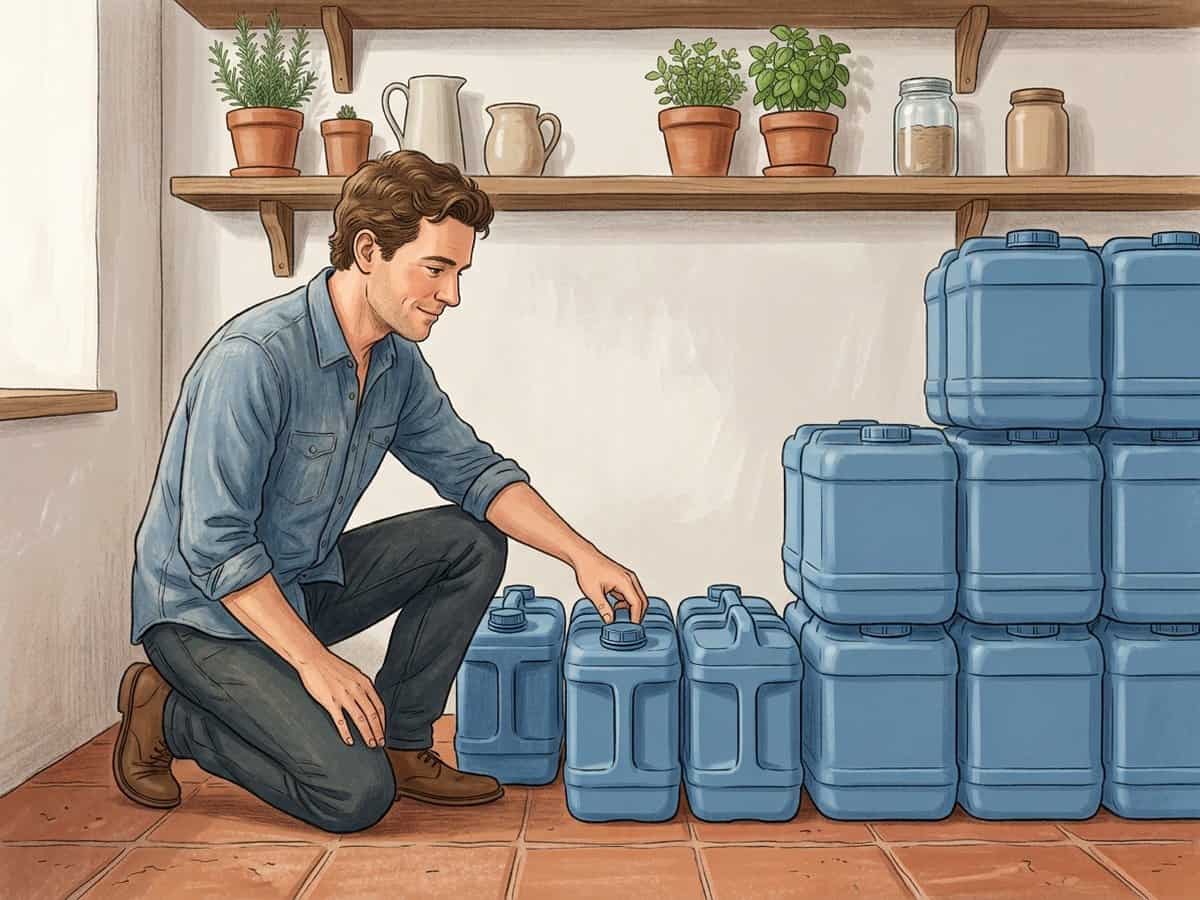
The safest emergency water container is unopened commercial bottled water; after that, an FDA-approved food-grade container with a tight lid and a narrow opening.
The CDC ranks these directly: unopened, commercially bottled water is the safest and most reliable source of water in an emergency. Nothing you fill at home matches it, because the bottler is regulated by the FDA as a food producer and you are not.
For water you store yourself, the CDC asks for containers that are food-grade, unbreakable rather than glass, and fitted with a tight cover. It is explicit on the exclusion: never use a container that previously held toxic chemicals such as bleach or pesticides. Residue does not wash out, and rinsing does not make a solvent container safe.
HDPE (high-density polyethylene, the food-grade plastic most water containers are moulded from) is what you will meet most often. A narrow opening matters more than people expect — it lets you pour without putting a hand, a cup or a jug rim into the stored water.
-
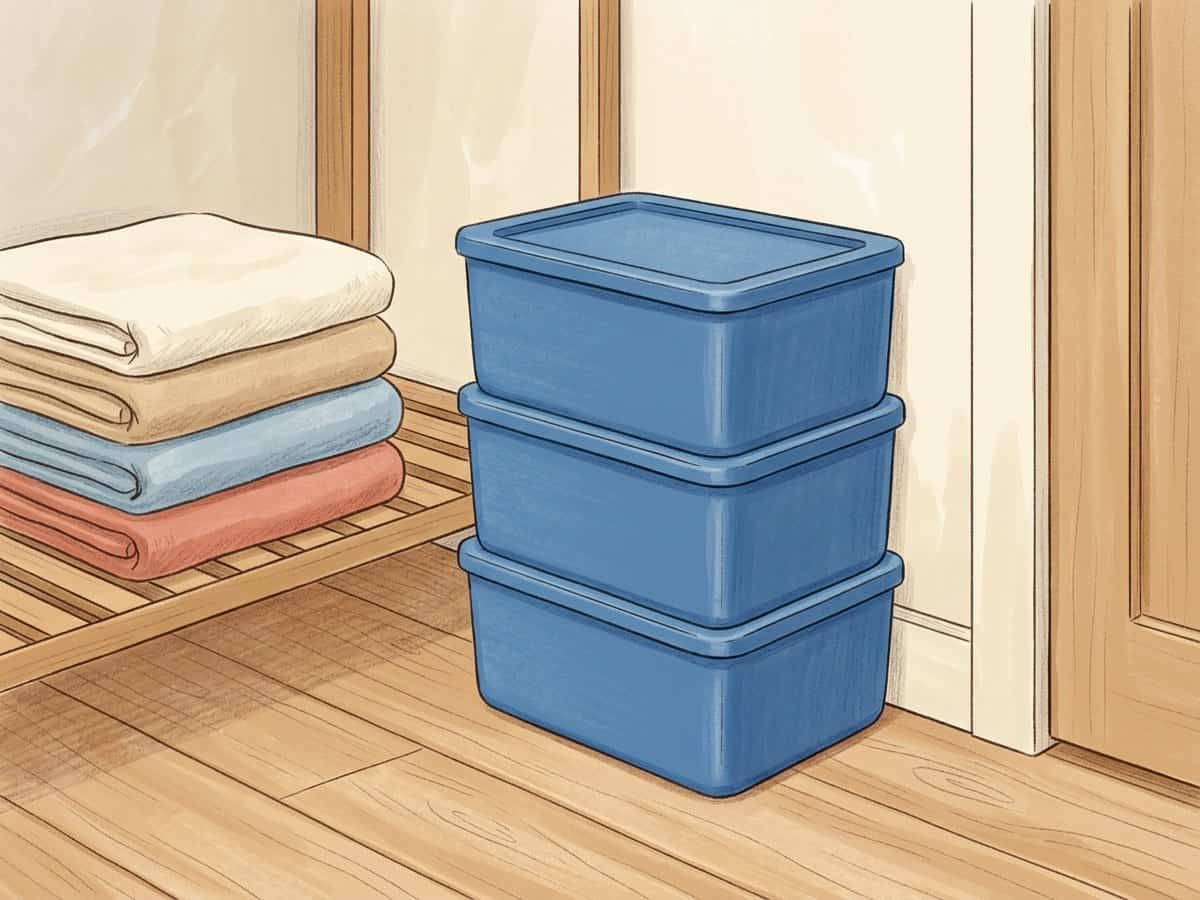
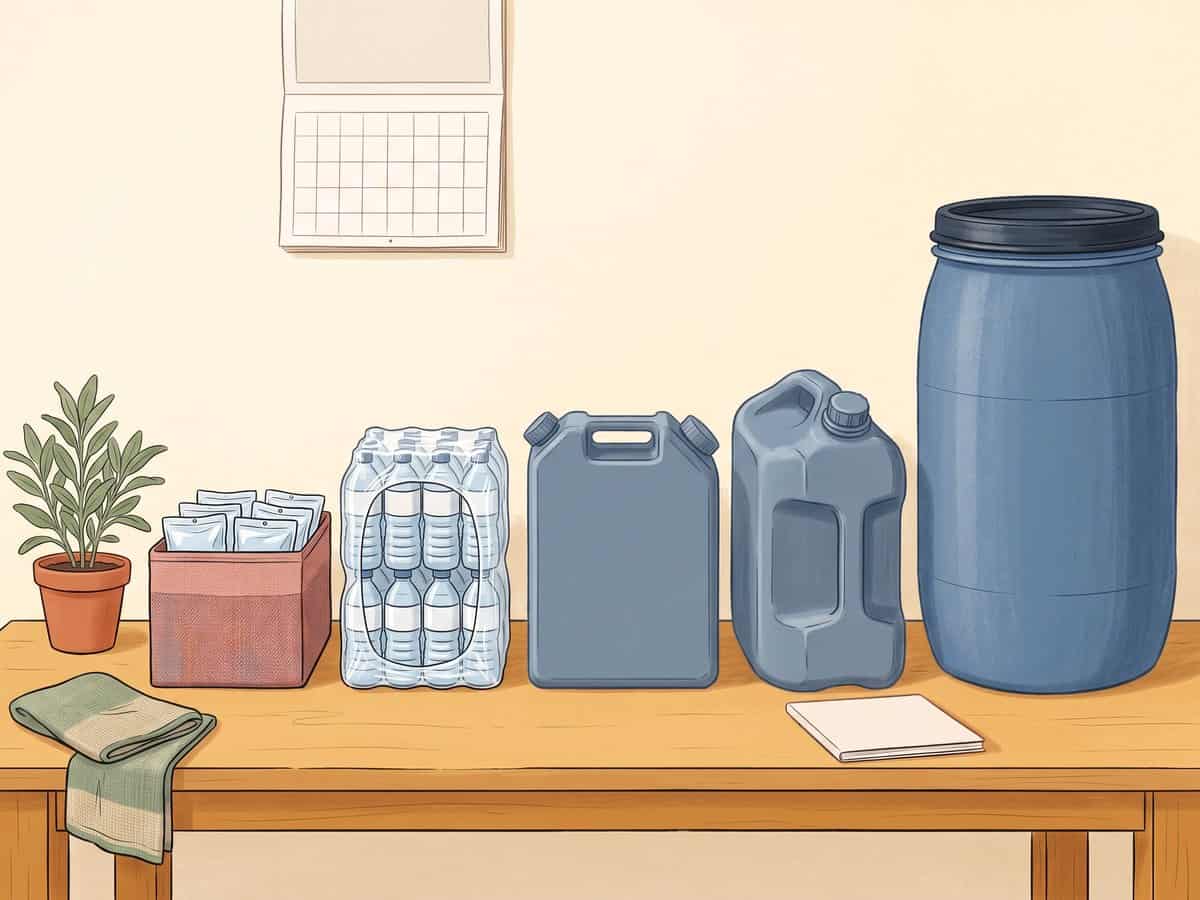
Format A · roughly 3–5 gallons
Stackable bricks
Flat and designed to stack, so a supply grows a few gallons at a time on a closet floor or under a bed.
-
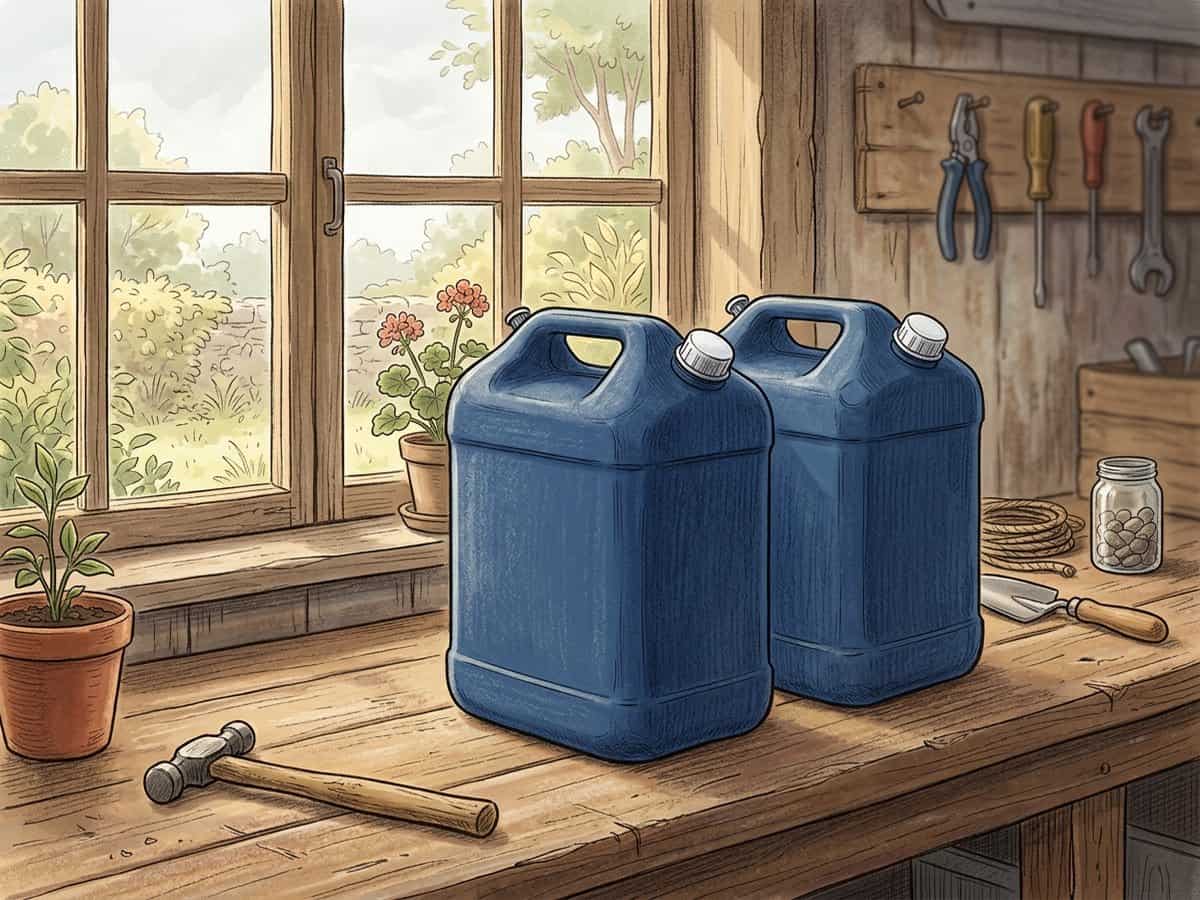
Format B · roughly 5–7 gallons
Portable jugs
A handle and a spout. A filled 5-gallon jug holds about 41.6 lb of water, calculated — heavy, but still movable.
-
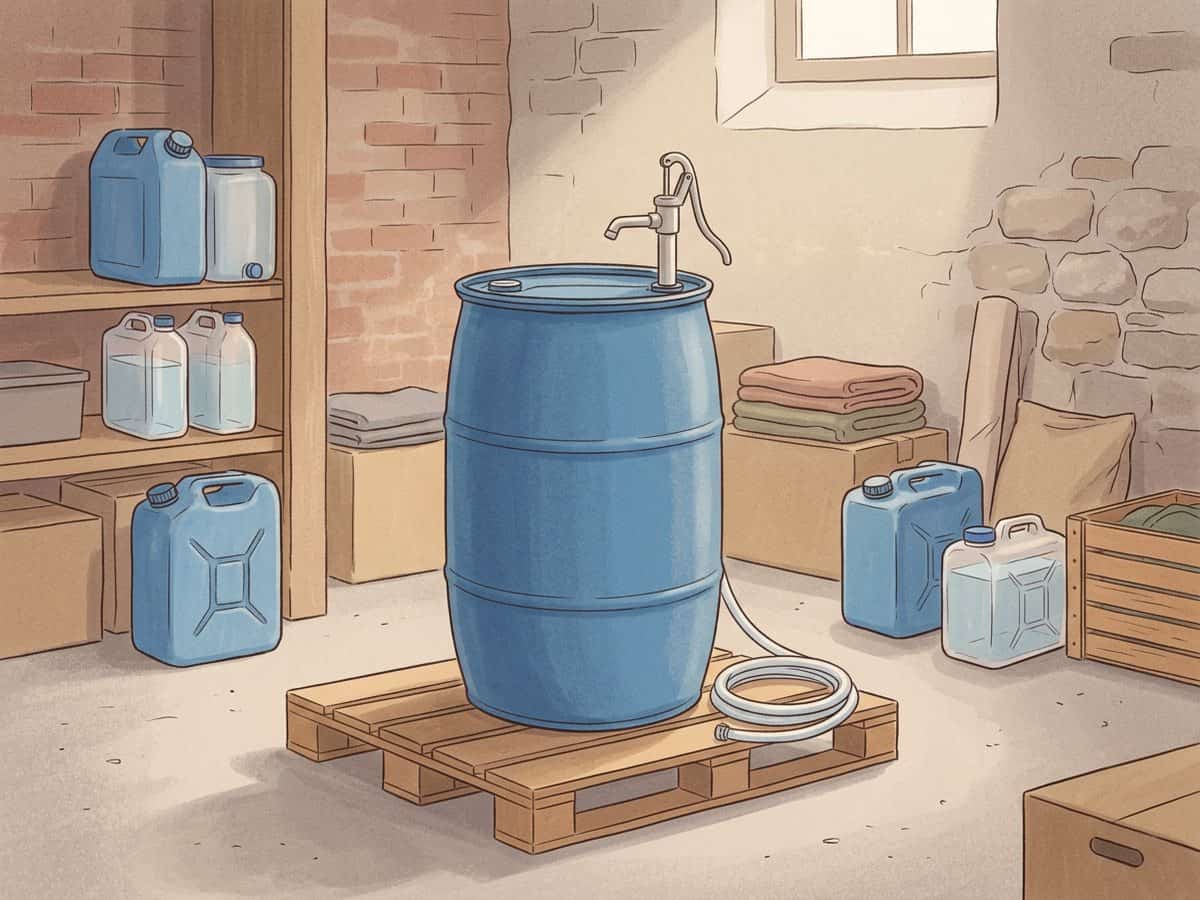
Format C · 55 gallons
Large barrels
The most water per square foot, and about 458 lb of it filled, calculated. Ground floor only, and useless without a pump.
-
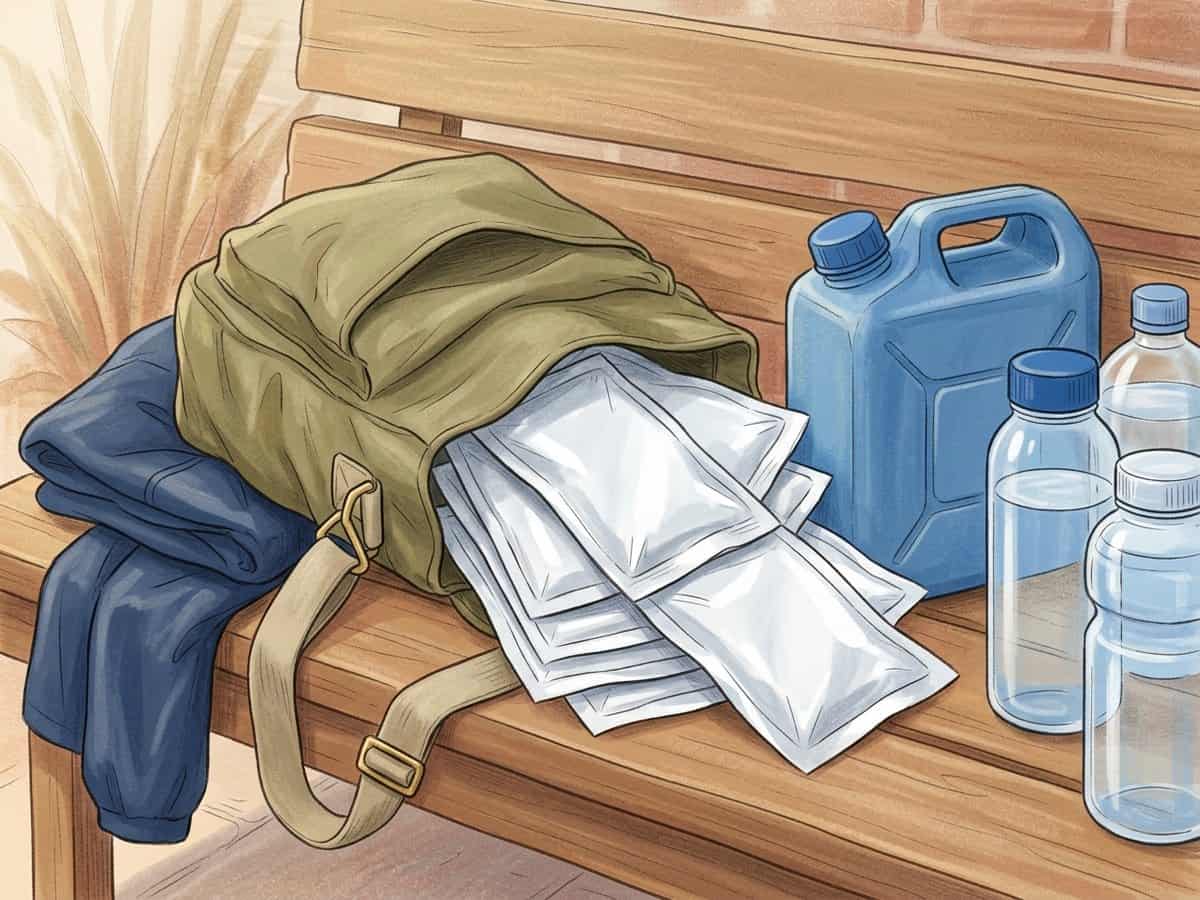
Format D · single serving
Sealed pouches
Not a household supply. Pouches belong in go-bags and car kits.
| Format | Typical range | Water weight, full (calculated) | Fits best |
|---|---|---|---|
| Stackable bricks | 3–5 gallons | 25–42 lb | Closets, under beds, renters building a supply gradually |
| Portable jugs | 5–7 gallons | 42–58 lb | Garages and vehicles, where water has to be carried |
| Large barrels | 55 gallons | about 458 lb | Ground-floor basements and garages, with a pump |
| Sealed pouches | Single serving | Negligible each | Go-bags and car kits, where weight and sealing matter |
Who a barrel is wrong for. Anyone above the ground floor, anyone who moves often, and anyone who cannot safely handle a container that can never be lifted once filled. A 55-gallon barrel without a pump is 458 pounds of water you cannot reach.
Specific containers, with only the specifications their manufacturers publish, are compared in the best emergency water storage containers.
05 · The interval
How long stored water lasts, and when to rotate it
Replace water you filled yourself every six months, per the CDC; leave commercially bottled water sealed and follow the date printed on the bottle.
The CDC is unambiguous: if you are filling containers with water to store, replace the water every six months. Ready.gov gives the same interval. Commercially bottled water is governed differently — keep it sealed in its original container and observe the manufacturer’s printed date.
Mixing those two rules up is one of the commonest setup mistakes. A sealed case of bottled water does not need replacing every six months; a jug you filled from the tap does, and no date printed anywhere on it will tell you when. Rotate on the date, not on inspection: stored water rarely looks wrong when it is due.
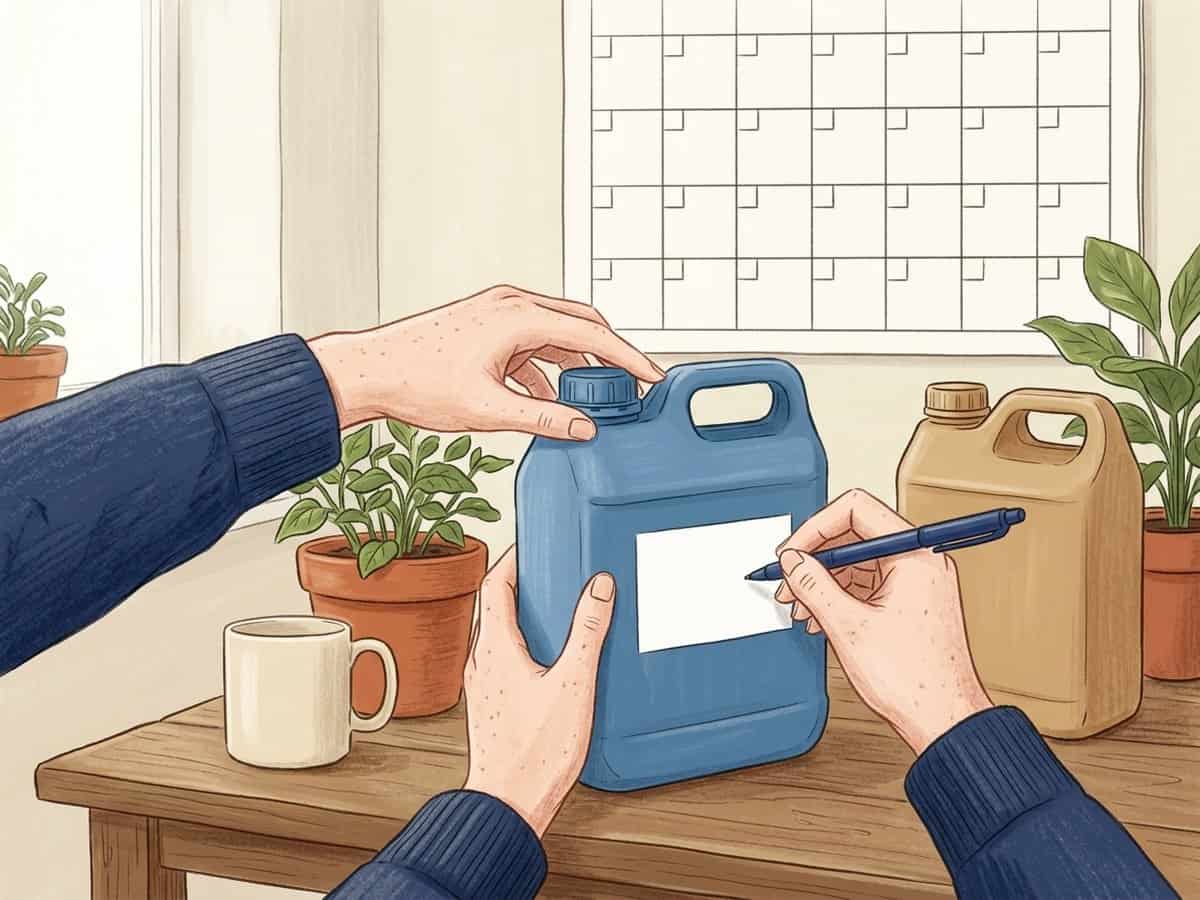
- Label on the day you fill. Fill date, in permanent marker, on the container itself rather than on a lid that gets swapped.
- Set two reminders, six months apart. The interval is the rule; memory is not.
- Rotate the water, not the container. Empty, wash, refill, relabel — and use the old water for something rather than pouring it away.
- Leave sealed bottled water alone. Its date is printed on it, and opening it starts a different clock.
06 · The weight
Water weighs more than the plan expects
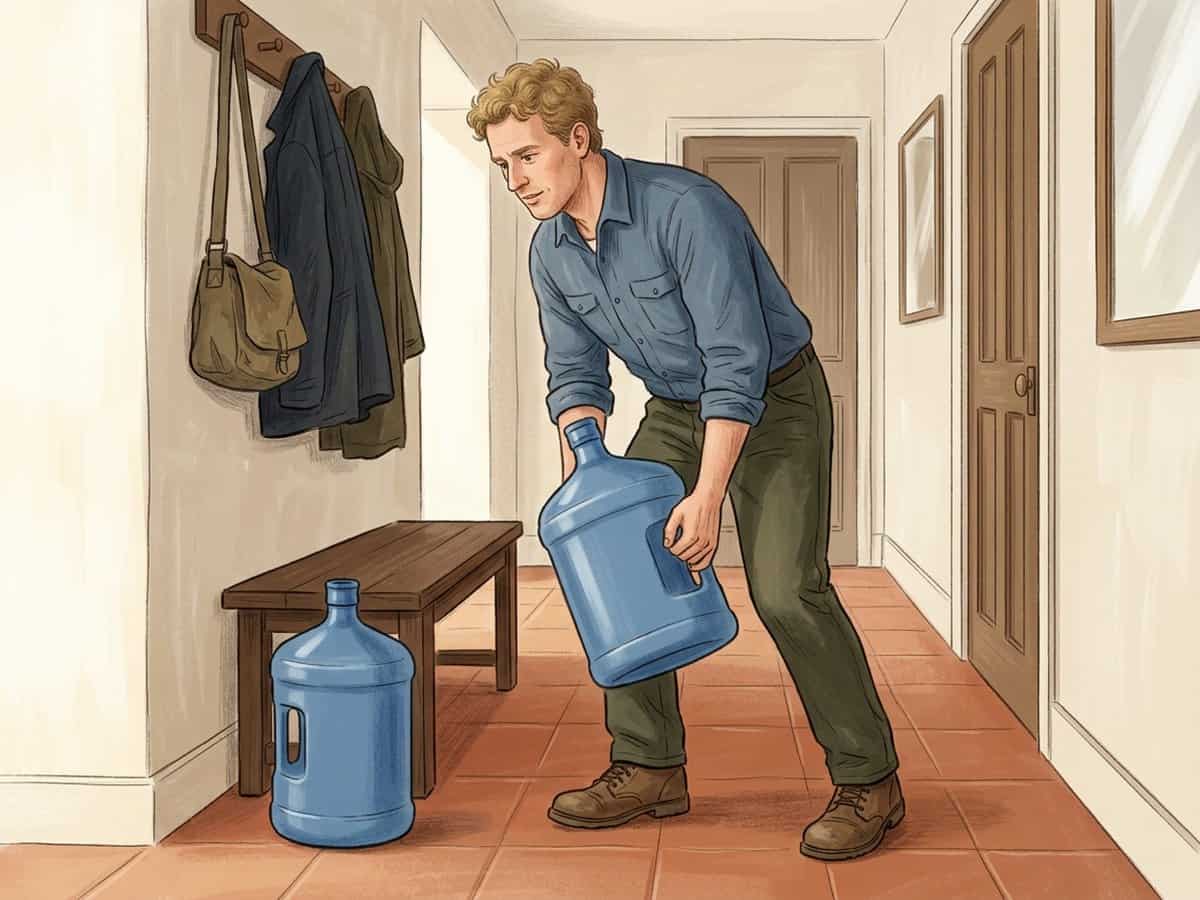
One US gallon of water weighs 8.329 pounds at 70°F, which is the single fact that decides where a household supply can physically live.
That figure comes from the USGS Water Science School. Everything here is arithmetic from it, and labelled as such. Those are water weights only — a container’s own empty weight is separate, and only its manufacturer publishes it.
Two consequences follow. A container you cannot lift is a container you will not rotate, and an un-rotated supply quietly stops being a supply. And weight concentrates: shelving, closet floors and upper storeys all have limits that a single large vessel can reach on its own. Splitting the supply across several smaller containers solves both problems at once.
This is general preparedness information, not a substitute for instructions from local emergency officials or your water utility during an active event. If water may contain fuel, chemicals, salts or other non-microbial contamination, do not assume boiling or disinfection makes it safe.
07 · Your actual home
Apartments, families and pets
The daily allowance does not shrink because the home does — what changes is how the same number of gallons gets broken up and where it goes.
Small spaces
Apartments and rentals
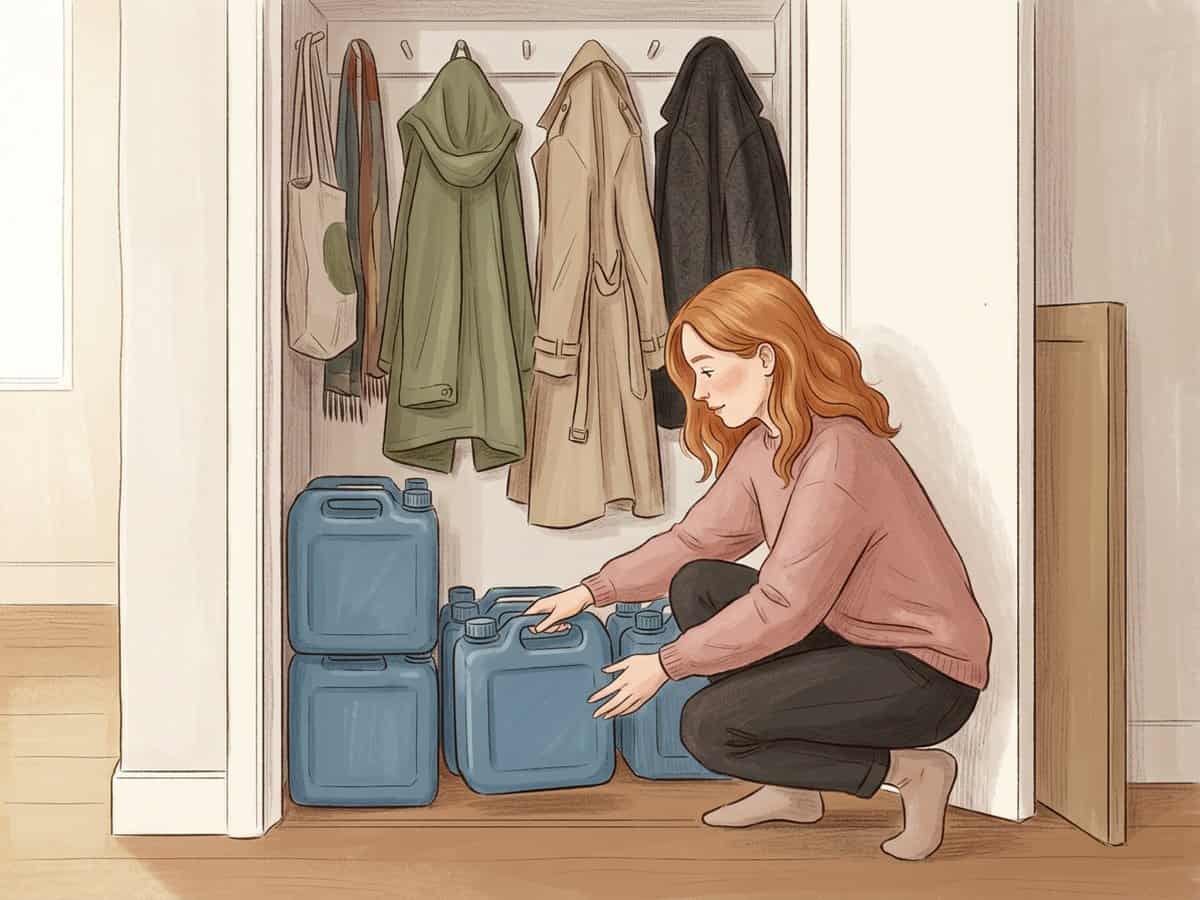
Two people still need 6 gallons for three days, about 50 pounds of water, calculated. Split it across several small stackable containers on interior closet floors and under beds, so no single shelf carries it all.
Households with children
Families
Plan above the baseline. Ready.gov names the groups: children, nursing mothers and sick people may need more water, and a medical emergency may require additional water. No agency publishes a per-group figure, so add margin deliberately rather than inventing a multiplier.
Animals
Pets
Add for every animal on top of the household total. Ready.gov and FEMA say only “several days’ supply” with no volume; the AVMA asks for at least seven days’ worth. Size it from what your animals actually drink in a normal week.
What goes wrong
Common emergency water storage mistakes
The usual failures are undated containers, hot or sunlit locations, chemicals stored nearby, and containers too heavy to rotate — and every one of them fails the same way.
None of them announce themselves: the supply looks fine for years and fails in the week it is needed.
Containers with no fill date
Date every container you fill, the day you fill it.
A hot attic, garage or sunny window
A cool, dark interior space between 50°F and 70°F.
Water beside fuel, solvents or pesticides
A different room from anything that gives off vapour.
One vessel too heavy to lift
Several smaller containers you can actually rotate.
A wide open top everyone dips into
A narrow opening, a pour spout or a pump, so hands and cup rims stay out of stored water.
Where to go next
Pick the situation closest to yours
Each route below goes deeper on one decision from this page.
- A-03QuantityHow much emergency water you needWorked examples by household size, and what to add for heat, illness and animals.
- A-04Shelf lifeHow long emergency water can be storedWhat the six-month interval covers, and what sealed bottled water does instead.
- A-02MethodHow to store water long termFilling, sealing, labelling and placing a supply, step by step.
- A-09ContainersThe best emergency water storage containersFormats and products compared on manufacturer-stated specifications only.
- A-06Small spacesStorage for apartments and small homesFootprint, floor loading and lease-friendly setups.
- A-07HouseholdsStorage for families with childrenPlanning above the baseline without an unpublished figure.
- A-08AnimalsEmergency water storage for petsWhat the agencies publish, what they do not, and how to size it honestly.
08 · Asked most often
Emergency water storage questions
How much emergency water should I store for my family?
Store at least 1 gallon per person per day for at least 3 days, which is 12 gallons for a household of four. Ready.gov notes that children, nursing mothers and sick people may need more, and that water needs can double in very hot temperatures.
How long can you store emergency water?
Water you fill yourself should be replaced every 6 months, according to the CDC. Commercially bottled water should stay sealed in its original container, and the CDC says to observe the expiration date printed on the bottle.
Can I reuse milk jugs or soda bottles to store emergency water?
The CDC recommends FDA-approved food-grade water storage containers and does not endorse reusing household drink containers. It also states that containers previously used for toxic chemicals such as bleach or pesticides must never be used, and that containers should be durable and unbreakable rather than glass.
Where should I store emergency water in an apartment?
Use interior closet floors, under-bed space and interior cabinets, which stay closest to the 50°F to 70°F range the CDC recommends and keep water out of direct sunlight. Split the supply across rooms so no single shelf or floor area carries all of the weight.
Is bottled water better than water I fill myself?
The CDC states that unopened, commercially bottled water is the safest and most reliable source of water in an emergency. The FDA regulates bottled water as a food, and home-filled water carries a 6-month replacement interval that sealed bottled water does not.
How do I store emergency water for pets?
Add water for every animal on top of the household total and store it under the same rules as the rest of the supply. Ready.gov and FEMA publish no per-animal volume, and the AVMA asks for at least seven days’ worth, also without a volume. Size it from what your animals drink in a normal week, and ask your veterinarian about your own animal.
Evidence
Sources for every figure on this page
Every quantity, temperature, interval and weight above traces to one of the sources below, and anything an agency does not publish is named as unpublished rather than estimated.
- Centers for Disease Control and Prevention, How to Create and Store an Emergency Water Supply. Page last reviewed 27 June 2025. Source for the 1-gallon allowance, the 3-day window, the two-week suggestion, the 50–70°F range, the 6-month replacement interval, the food-grade container standard and the bottled-water ranking.
- Ready.gov, Water. Source for the higher-need groups, the hot-weather doubling, and the sealed-bottled-water handling.
- U.S. Geological Survey Water Science School, Water Density. Source for 8.329 lb per US gallon at 70°F, from which every weight here is calculated.
- U.S. Environmental Protection Agency, Emergency Disinfection of Drinking Water. Referred to for water that may be unsafe. Treatment is outside the scope of this page, which publishes no treatment instructions of any kind.
- American Veterinary Medical Association, Pets and disasters. Source for the seven-day pet supply window, and for the absence of any per-animal volume.