Daily water, explained
How Much Water Should a Person Drink a Day?
There is no single number for everyone. The National Academies set an adequate total water intake of about 2.7 liters (91 ounces) a day for women and 3.7 liters (125 ounces) for men, counting every drink and the water in food, and most healthy people meet it by letting thirst guide them.
The short answer
How much water a person should drink a day, in plain numbers
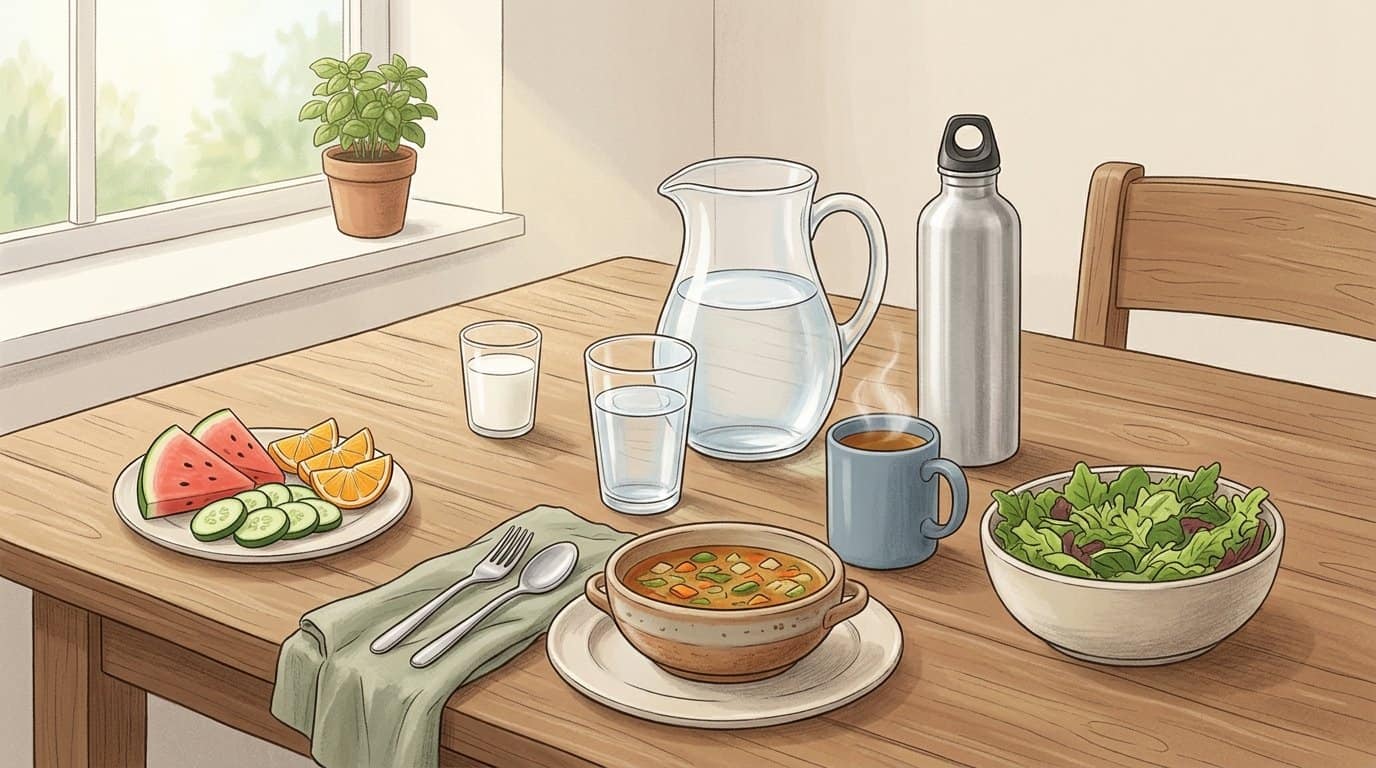
How much water a person should drink a day has a reference answer, not a rule: about 91 ounces of total water for women and 125 ounces for men, of which roughly 80 percent usually comes from drinks.
Those figures come from the National Academies of Sciences, Engineering, and Medicine, the body that sets the Dietary Reference Intakes used across the United States. In its 2004 report on water, the National Academies set an adequate intake, a level judged to be enough for most healthy people rather than a minimum or a target, at about 2.7 liters of total water a day for women and 3.7 liters for men. “Total water” means every source: plain water, other drinks, and the water inside food. The same report says about 80 percent of that usually comes from drinking water and beverages and about 20 percent from food, and that most healthy people meet their daily needs by letting thirst guide them.
The Centers for Disease Control and Prevention (CDC), the federal public-health agency, does not publish a single daily number. Its guidance says daily water intake recommendations vary by age, sex, pregnancy status, activity level and breastfeeding status.
| Reference | Total water a day | In cups (calculated) | From drinks, about 80% (calculated) | From food, about 20% (calculated) |
|---|---|---|---|---|
| Women | About 2.7 L / 91 oz | About 11.4 cups | About 73 oz | About 18 oz |
| Men | About 3.7 L / 125 oz | About 15.6 cups | About 100 oz | About 25 oz |
Read these as a reference, not a prescription. An adequate intake describes healthy populations. It is not a personal target, and this page does not tell any individual what to drink. Children, pregnancy, breastfeeding, illness and many medicines change the picture; a clinician is the right person for those.
One day of water
Where a day’s water comes from, and why an emergency gallon is bigger
Scroll through three steps. The drawing is to scale: every glass and the gallon share one height per ounce, and every number sits in the text beside it.
-
1. Food carries part of the day’s water
About 20 percent of total water usually comes from food, according to the National Academies. For the women’s reference of 91 ounces that is about 18 ounces; for the men’s 125, about 25 (calculated).
The CDC notes that foods with high water content, such as many fruits and vegetables, add to fluid intake.
- Water from food
-
2. Every drink counts, not only plain water
The other 80 percent or so comes from drinks: about 73 ounces for women and 100 for men (calculated). The CDC counts plain water, milk, 100% juice, plain coffee or tea, and sparkling water.
The dashed line marks 44 ounces, the plain water the average U.S. adult drank a day in 2015–2018 (CDC). The rest of a typical day’s drinking is everything else in the glass.
- Plain water
- Other drinks
- Average plain water
-
3. The emergency gallon is a different unit
For stored emergency water, the CDC and Ready.gov say at least 1 gallon, 128 ounces, per person per day, for drinking and sanitation. Ready.gov puts a normally active person’s fluid need at about ¾ of a gallon, 96 ounces.
The solid line on the jug marks that ¾. The lighter band above it, the last ¼ gallon or 32 ounces, is simply what the gallon holds beyond it (calculated), which is why a gallon is more than a day’s drinking.
- About ¾ gallon of fluid
- The remaining ¼ gallon
A drawn illustration to one scale, 3 pixels per fluid ounce. It carries no numbers of its own; every figure is in the text and cited in the sources below.
Try it
Count how much plain water you drink in a day
The fastest way to see how much water you drink in a day is to count glasses and multiply by the glass size, then compare the total with the reference marks.
Your glasses, in ounces and liters
A converter with reference marks. It does not tell you what to drink.
How this is worked out. Ounces is glasses × glass size. Liters is ounces × 0.0296. Gallons is ounces ÷ 128. The marks are the CDC’s 44-ounce average for U.S. adults, the drinks share of the National Academies references (about 80 percent of 91 and 125 ounces, calculated), and the 128-ounce emergency gallon.
What it will not do. It gives no verdict and no personal target. It counts plain water only; food, coffee, tea and milk add to the day, and needs differ with age, pregnancy, breastfeeding, activity, heat and health.
Eight 8-ounce cups come to 64 ounces, just under 1.9 liters. That is more plain water than the average U.S. adult drank in the CDC’s 2015–2018 figures and less than either National Academies drinks share, which is exactly why a glass count on its own says little: the reference covers every drink and the water in food.
The famous rule
Is eight glasses of water a day right? What the agencies actually say
Eight glasses of water a day is a memorable habit, not an agency recommendation: none of the National Academies, CDC or Ready.gov pages checked for this guide sets an eight-glass rule.
The eight-by-eight idea, eight 8-ounce glasses, adds up to 64 ounces of plain water. The National Academies reference is built differently. It is a total that includes every drink and the water in food, and it is much larger than 64 ounces for both women and men. It also comes with a qualifier the eight-glass rule lacks: thirst guides most healthy people to enough.
So the rule is wrong in two directions at once. It leaves out coffee, tea, milk, juice and water-rich food, which the CDC counts. And it hands every person one fixed number when the CDC says needs vary by age, sex, pregnancy, activity and breastfeeding. A glass count is a fine reminder to drink. It is not a measure of whether you are drinking enough.
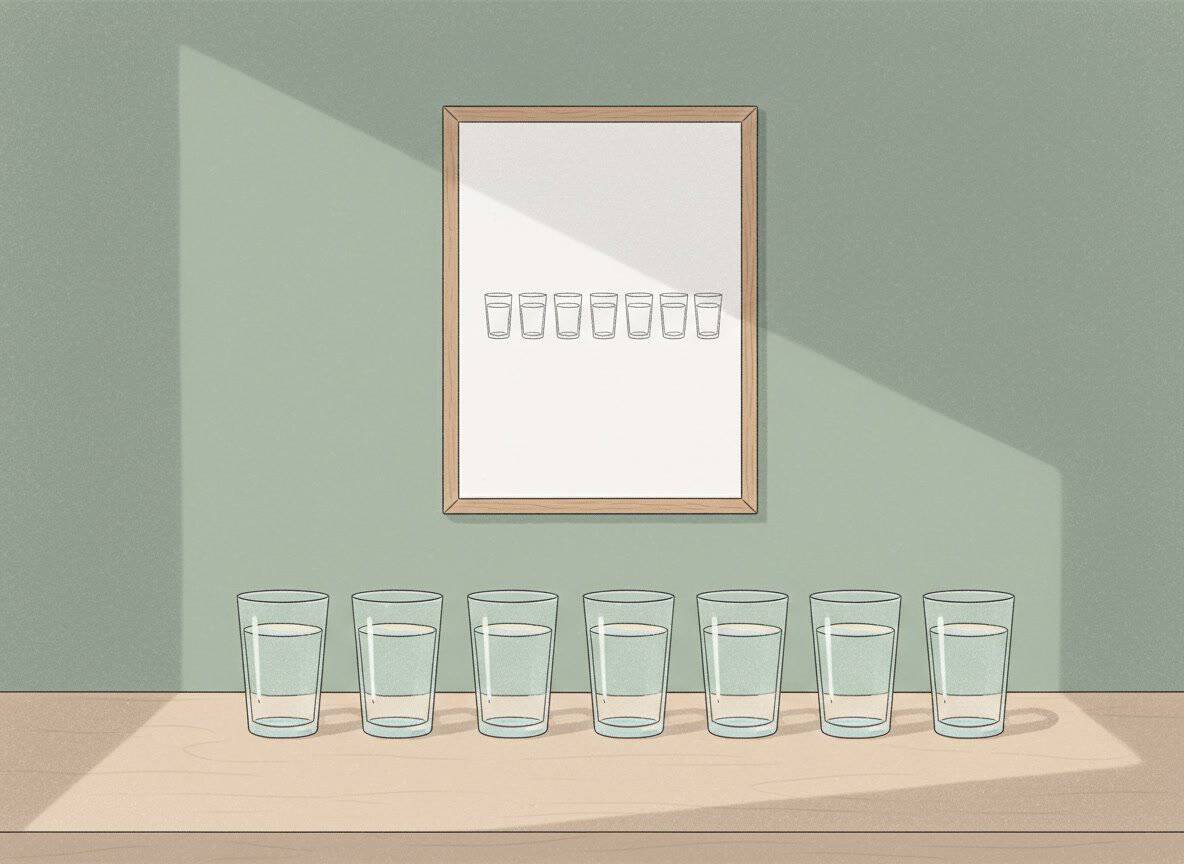
There is a third version of “eight glasses” that matters for preparedness. One gallon is 128 ounces, which is about eight 16-ounce glasses. That gallon is the emergency storage allowance per person per day, and it covers drinking and sanitation. It is not eight glasses of drinking water, and it is not a drinking target.
What counts
Do coffee, tea, milk and food count toward daily water?
Coffee, tea, milk, juice and water-rich food all count toward daily water, according to the CDC, alongside plain water.
The CDC’s guidance on water and healthier drinks lists plain drinking water, milk and fortified milk alternatives, 100% fruit or low-sodium vegetable juice, plain coffee or teas, and sparkling water or seltzers as drinks that count toward daily fluid intake. It adds that foods with high water content, such as many fruits and vegetables, can also add to fluid intake.
That matches the National Academies’ split: roughly four-fifths of total water from drinks and one-fifth from food. It also explains why two people who drink the same number of glasses can be in very different places once breakfast coffee, a glass of milk and a salad at lunch are counted.
What the CDC’s list does not do is treat every drink the same for health. Its guidance favours water and unsweetened drinks and steers away from sugary ones. Counting a drink toward water is not the same as recommending it.
It depends
What raises how much water a person needs
How much water a person needs rises with heat, physical activity, pregnancy and breastfeeding, illness and age, and the agencies name these factors without publishing a figure for each.
- Heat. Ready.gov says water needs can double in very hot temperatures. That is the one agency multiplier in this guide, and it is written for emergencies, not for everyday drinking.
- Activity. The CDC lists activity level among the factors that change daily water recommendations.
- Pregnancy and breastfeeding. The CDC lists both. Ready.gov says nursing mothers may need more water.
- Children. Ready.gov says children may need more; the CDC lists age as a factor. Children’s amounts are a question for a pediatrician.
- Illness. Ready.gov says sick people may need more water. Some conditions and medicines call for less; that is a question for a clinician.
Notice what is missing from that list: numbers. The agencies checked for this guide name the factors but publish no per-factor amount, and this page will not invent one. The honest form of advice here is “more, sometimes much more, and ask a clinician when it matters.”
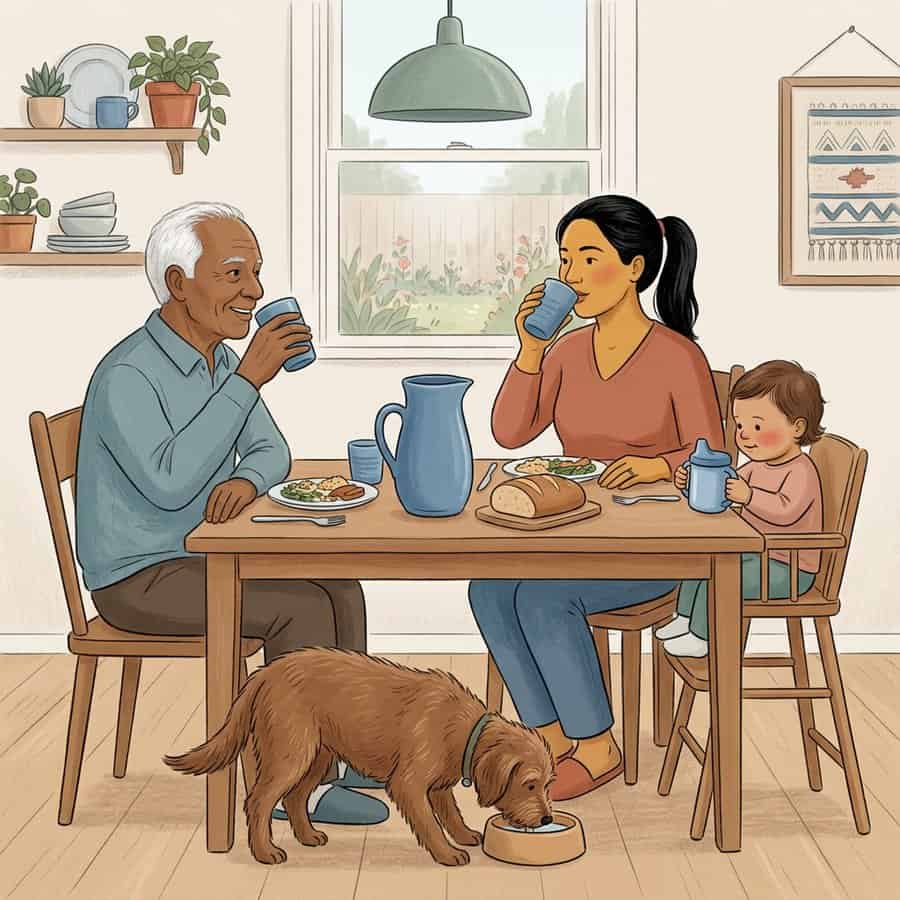
When to ask a clinician. Pregnancy, breastfeeding, a child’s needs, kidney or heart conditions, and medicines that affect fluid balance are all reasons to get individual advice rather than use a reference figure.
From a glass to a gallon
How much water to store for an emergency, compared with daily drinking
How much water to store for an emergency is set by a separate rule: at least 1 gallon per person per day, for at least 3 days, and a 2-week supply if possible, according to the CDC.
Daily drinking and emergency storage answer different questions. The National Academies reference describes what a healthy person takes in on an ordinary day. The storage allowance describes what a household should have on hand if the tap stops, and it has to cover washing, cooking and hygiene as well as drinking. That is why it is a whole gallon, 128 ounces, when Ready.gov’s drinking figure for a normally active person is about ¾ of a gallon.
| Household | 3 days | 2 weeks | 2-week weight (calculated) |
|---|---|---|---|
| 1 person | 3 gallons | 14 gallons | About 117 lb |
| 2 people | 6 gallons | 28 gallons | About 233 lb |
| 4 people | 12 gallons | 56 gallons | About 466 lb |
Ready.gov says those needs can double in very hot temperatures, and that children, nursing mothers and sick people may need more. It also says not to ration drinking water unless ordered to by authorities: drink what you need today, and look for more tomorrow.
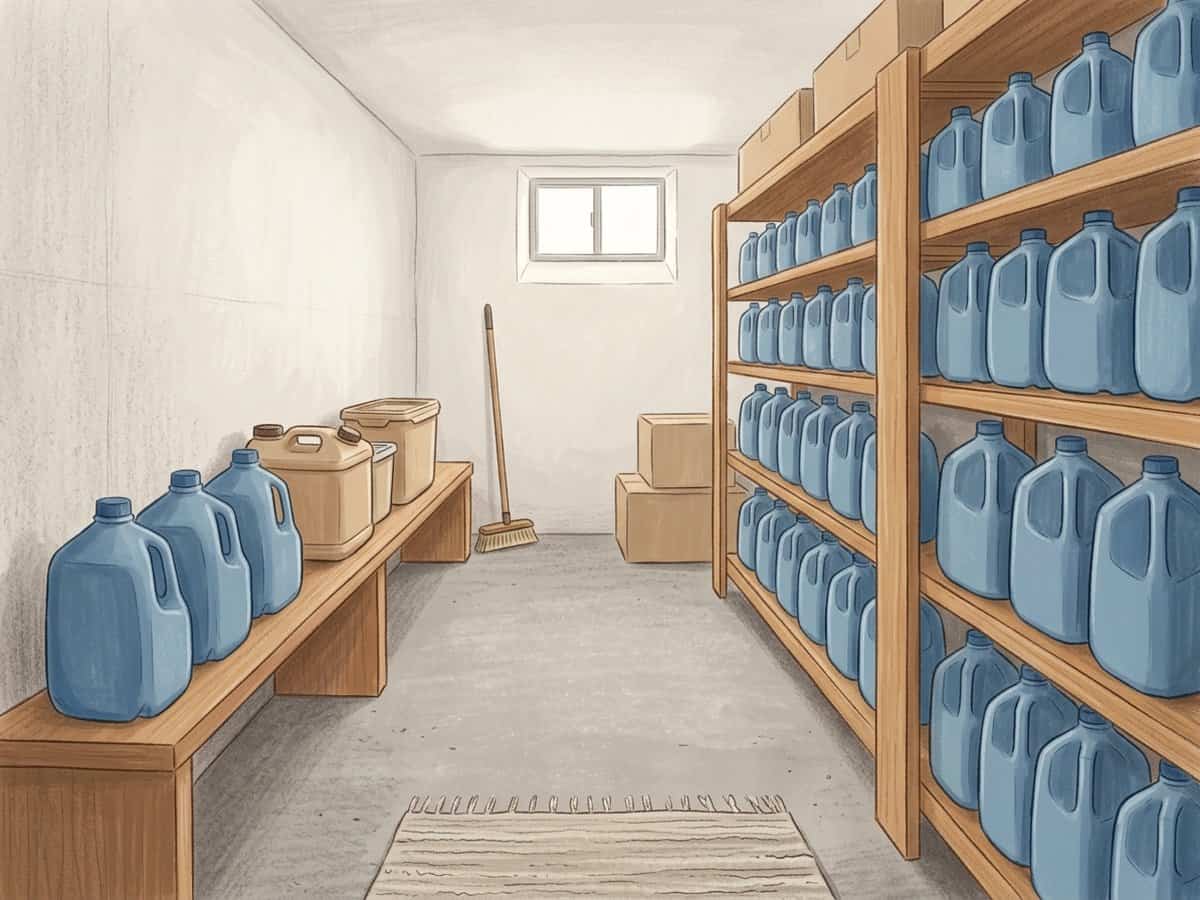
If you are planning a supply, the emergency water storage calculator works out gallons, containers and weight for your household, and the emergency water storage guide covers containers, placement and rotation.
Keep going
Where to go next on daily water and emergency water
Daily water and emergency water sit side by side on this site: the pages below take either question further.
Questions
Common questions about how much water to drink
Short answers to what people most often ask about daily water.
The National Academies set an adequate total water intake of about 2.7 liters (91 ounces) a day for women and 3.7 liters (125 ounces) for men, from all drinks and food. About 80 percent usually comes from drinks. Most healthy people meet their needs by letting thirst guide them.
Eight 8-ounce glasses is 64 ounces of plain water. No agency page checked for this guide sets that rule. The National Academies reference is a larger total that also counts other drinks and the water in food, so a glass count alone does not show whether someone is drinking enough.
The National Academies reference is about 91 ounces of total water a day for women and 125 ounces for men. Roughly 73 and 100 ounces of that usually comes from drinks, calculated from the report’s 80 percent share.
Yes. The CDC lists plain coffee or teas among the drinks that count toward daily fluid intake, along with plain water, milk, 100% juice and sparkling water.
Yes. The National Academies say about 20 percent of total water usually comes from food, and the CDC notes that water-rich foods such as many fruits and vegetables add to fluid intake.
The CDC and Ready.gov say to store at least 1 gallon per person per day, for drinking and sanitation, for at least 3 days, and the CDC suggests a 2-week supply if possible. Ready.gov says needs can double in very hot temperatures.
Sources
Where these facts come from
Agency figures only, each checked in September 2026.
- National Academies of Sciences, Engineering, and Medicine, news release on the Dietary Reference Intakes for water (February 11, 2004). nationalacademies.org — about 2.7 L (91 oz) of total water a day for women and 3.7 L (125 oz) for men; about 80 percent from drinks and 20 percent from food; thirst as a guide. Checked September 2026.
- Centers for Disease Control and Prevention, “About Water and Healthier Drinks” (reviewed March 5, 2026). cdc.gov — recommendations vary by age, sex, pregnancy status, activity level and breastfeeding status; drinks that count; water-rich foods. Checked September 2026.
- Centers for Disease Control and Prevention, “Fast Facts: Data on Water Consumption” (reviewed January 19, 2024). cdc.gov — U.S. adults drank an average of 44 ounces of plain water daily in 2015–2018. Checked September 2026.
- Ready.gov, “Water.” ready.gov — about ¾ gallon of fluid daily for a normally active person; at least 1 gallon per person per day to store; needs can double in heat; children, nursing mothers and sick people may need more; do not ration drinking water unless ordered to. Checked September 2026.
- Centers for Disease Control and Prevention, “How to Create and Store an Emergency Water Supply” (reviewed June 27, 2025). cdc.gov — 1 gallon per person per day for at least 3 days; 2-week supply if possible. Checked September 2026.
- U.S. Geological Survey, “Water Density.” usgs.gov — 8.329 pounds per U.S. gallon at 70°F. Checked September 2026.