Planning Tool
Water Storage Rotation Schedule and Checklist
List what you have stored and when you filled it. The planner gives each home-filled container its replace-by month and can put those dates straight into your calendar.
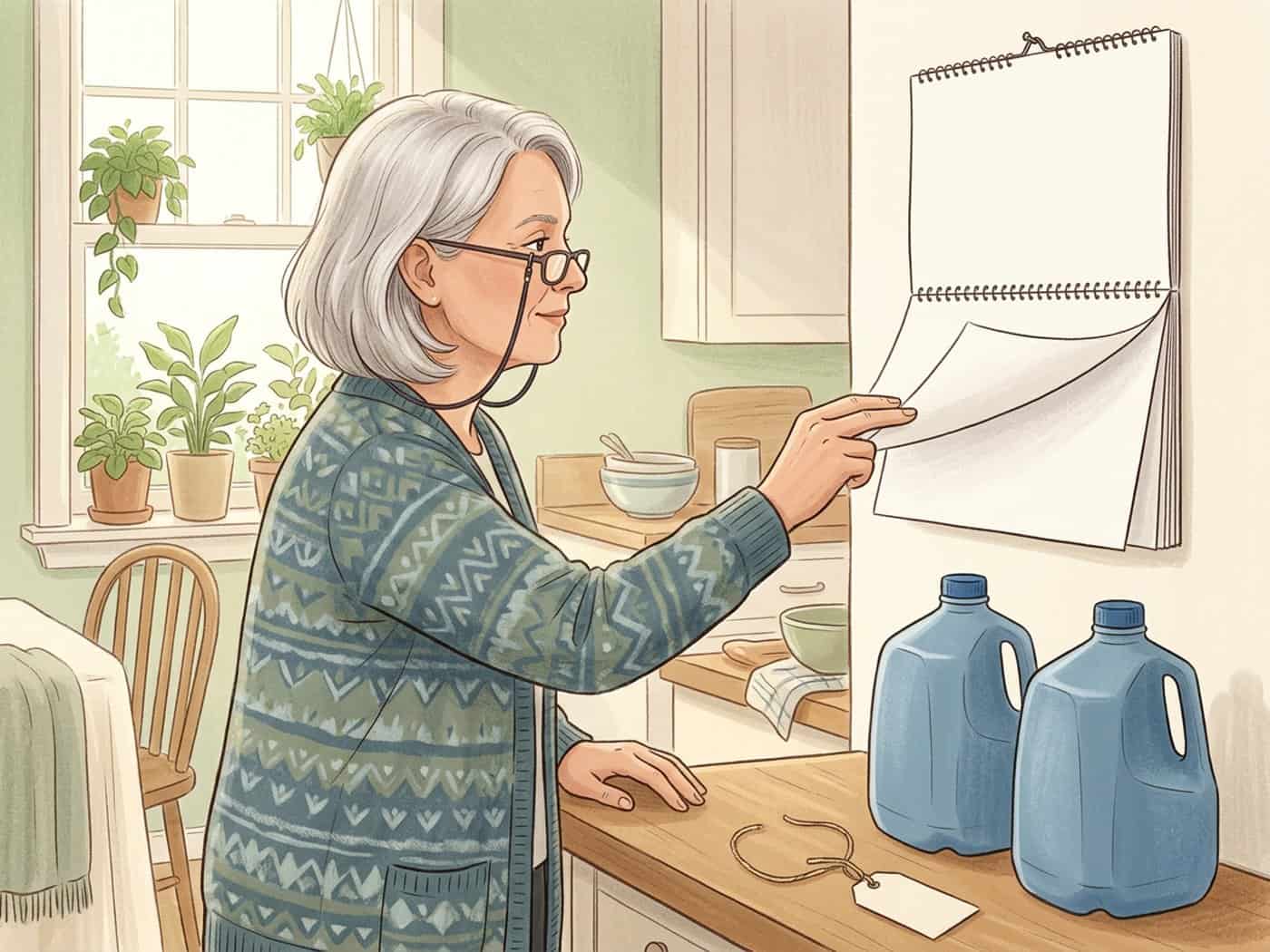
Your rotation schedule
Add each container or group of containers. Home-filled water gets a date; sealed bottled water does not, because no agency publishes one.
| Container | Kind | Filled | Replace by | Remove |
|---|---|---|---|---|
| Hall closet jugs | Home-filled | September 2026 | March 2027 | — |
| Pantry cases | Sealed bottled | September 2026 | Printed date on the bottle | — |
How this is worked out. For home-filled water the replace-by month is fill month + 6, because the CDC says to replace water you store yourself every 6 months. The calendar file adds one reminder on the first day of each replace-by month. Nothing is sent anywhere; the list lives only on this page while it is open.
Why bottled water gets no date. The CDC’s instruction for store-bought water is to observe its expiration date, and no agency sets a shelf life for sealed bottled water. The only date that applies is the one printed on your bottles.
The rules
The two rules a water storage rotation schedule follows
A water storage rotation schedule needs only two published rules: replace home-filled water every 6 months, and follow the printed date on sealed bottled water.
Both come from the CDC's emergency water page. Ready.gov gives the first rule in its own words: water that has not been commercially bottled should be replaced every six months. The second rule is the CDC's “observe the expiration date for store-bought water.” Everything else in a schedule is about making those two rules easy to keep.
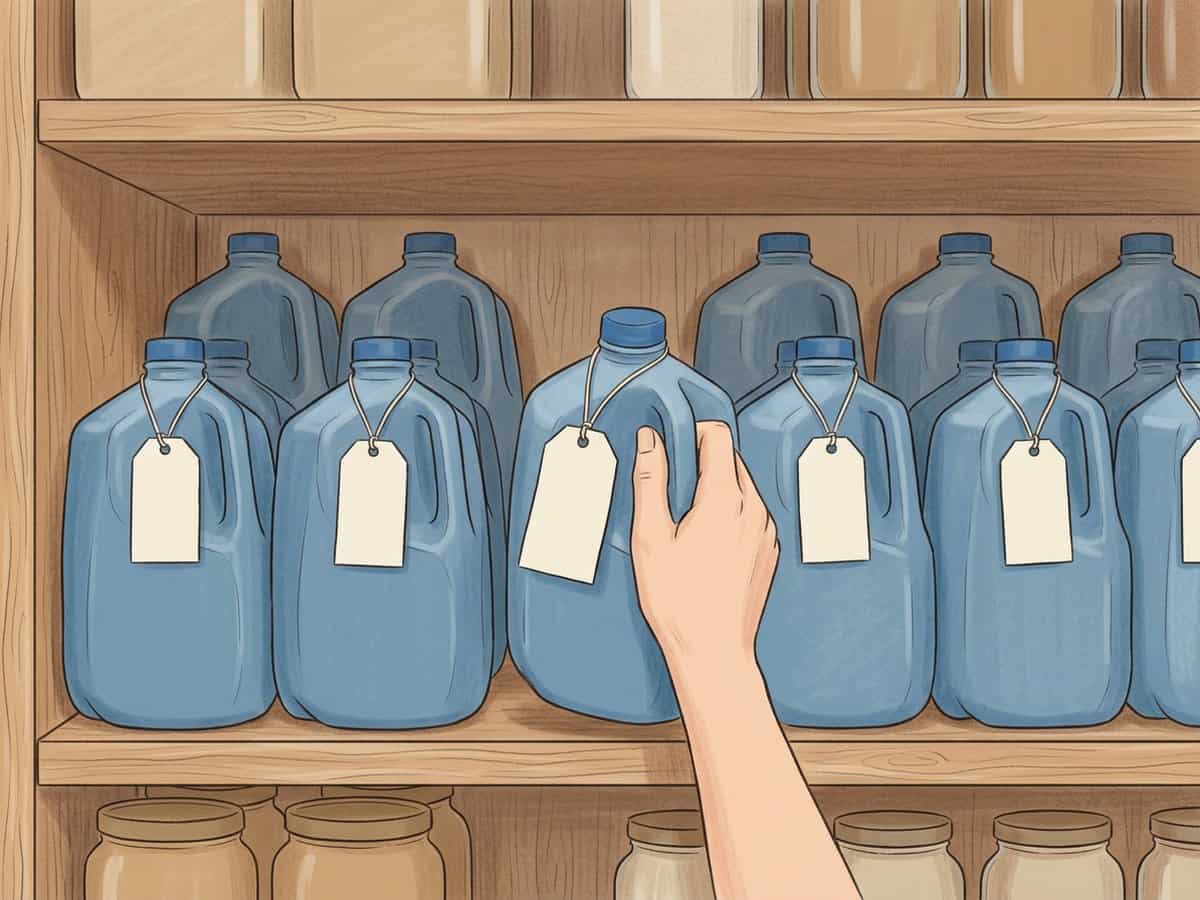
Can you tell which one is due?
- WrongNo labels, no order: six months later nobody knows which container is due.
- RightA label on every container, facing out, with the fill date written on it.
Make it stick
Three habits that keep a rotation schedule on track
A rotation schedule works when it is tied to dates you already notice and to labels you can read without moving anything.
Anchor it to a date you already keep. Two fixed days a year, six months apart, are easier to remember than a date for every container. Many households use the spring and autumn clock changes.
Write the date on every container. A fill date on a label facing out answers the only question that matters on rotation day. Keep bottled cases and home-filled containers on separate shelves so the two rules never get mixed up.
Split a large supply into two halves. Filling half your containers three months after the other half turns one big rotation job into two smaller ones. This is a practical habit, not agency guidance; each container still follows the 6-month rule.
Twice a year
The water storage checklist to run on rotation day
Rotation day is the moment to check the whole supply, not just to swap the water.
Rotation day
Six checks, about ten minutes
0 of 6 steps checked
If the recount shows a gap, the calculator turns it into containers and pounds: emergency water storage calculator. The full reasoning behind both rules is in how long emergency water can be stored.
Questions
Common questions about rotating stored water
Short answers to the questions that come up on rotation day.
Replace water you stored yourself every six months, according to the CDC and Ready.gov. Sealed commercially bottled water follows the expiration date printed by its manufacturer instead.
No agency cited here publishes a rule for reusing rotated water. A practical approach is to use it for cleaning or watering plants rather than pouring it away, then clean and refill the container.
No. The six-month rule applies to water you stored yourself. For store-bought water, the CDC says to observe the expiration date, so rotate bottled water into everyday use before the date printed on it.
No. The list exists only while the page is open, and nothing is sent anywhere. To keep your schedule, download the calendar reminders or print the page.
Sources
Where these rules come from
Both rotation rules come from these sources, checked in September 2026.
- Centers for Disease Control and Prevention, “How to Create and Store an Emergency Water Supply” (reviewed June 27, 2025). cdc.gov — replace home-filled water every 6 months; observe the expiration date for store-bought water; 50°F–70°F, away from sunlight and toxic substances. Checked September 2026.
- Ready.gov, “Water.” ready.gov — water that has not been commercially bottled should be replaced every six months; at least 1 gallon per person per day. Checked September 2026.