Emergency Water Storage
Used 55 Gallon Barrels for Water Storage: What Is Safe
A free or cheap drum looks like the bargain of the whole project. Whether it can hold drinking water depends on one thing the drum cannot tell you by looking at it: what was inside before.
The CDC says not to use containers that previously held toxic chemicals, such as bleach or pesticides, and recommends FDA-approved food-grade containers for stored water. A used 55-gallon barrel is only a candidate if you can confirm it never held a toxic chemical. If its history is unknown, treat it as disqualified. A filled 55-gallon barrel also holds about 458 pounds of water (calculated), so where it sits matters as much as what it held.
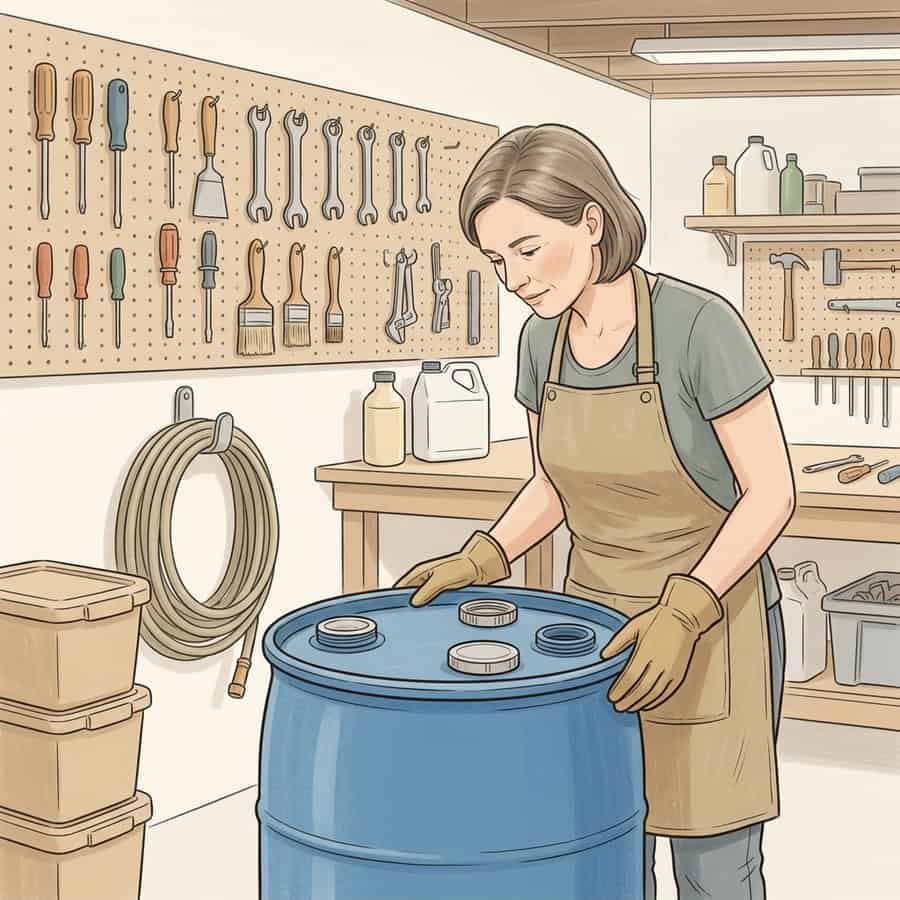
What you’ll learn
The short version
A used 55-gallon barrel can be acceptable for water storage only when its history is known, and a drum that held any toxic chemical is ruled out for good.
- The CDC rules out any container that previously held toxic chemicals.
- The CDC prefers FDA-approved food-grade containers for stored water.
- Unknown history means you cannot meet the rule, so walk away.
- Colour is not a certification; a blue drum can have held anything.
- A full barrel weighs about 458 pounds of water alone (calculated).
Step 1
The rule that decides whether a used barrel is usable
The CDC’s container guidance gives one hard rule for used barrels: never store drinking water in a container that previously held toxic chemicals.
The CDC’s emergency water page is direct: “Do not use containers that were previously used to hold liquid or solid toxic chemicals, such as bleach or pesticides.” The same page says it is best to use FDA-approved food-grade water storage containers when you fill containers yourself, and suggests surplus or camping supply stores as places to find them.
Where food-grade containers are not available, the CDC lists what a container must do instead. It should have a top that can be closed tightly, be made of durable, unbreakable materials rather than glass, and ideally have a narrow neck or opening so water can be poured out. A 55-gallon plastic drum can meet those physical requirements. Whether it meets the chemical one depends entirely on its past.
| What the barrel held before | What the CDC guidance says | What that means for you |
|---|---|---|
| A toxic chemical (cleaners, pesticides, solvents, fuel, industrial fluids) | Do not use containers that previously held toxic chemicals. | Ruled out for drinking water, however well it is cleaned. |
| Nothing you can confirm | No separate guidance; the chemical rule cannot be checked. | Treat as ruled out. If you cannot show it never held a toxic chemical, you cannot follow the rule. |
| A food product, with the history documented | Not ruled out by the chemical rule; food-grade containers are preferred. | A candidate, if the manufacturer documents it as food-grade and you can clean it properly. |
| Nothing, new and documented food-grade | Matches the CDC’s preferred container type. | The straightforward choice for a barrel supply. |
Step 2
Why a barrel’s history matters more than how it looks
A used 55-gallon barrel can look clean, smell neutral and be the right colour while still being unsuitable, because the rule is about what it held, not how it looks now.
Blue is the colour most people associate with water barrels, but colour is not a certification. Plastic drums of every colour are used across industry for chemicals, cleaners, oils and food ingredients alike. A blue drum that carried a cleaning concentrate is still a drum that carried a toxic chemical.
Rinsing does not change the history either. The CDC’s rule is not “do not use a dirty chemical container”; it is “do not use containers that were previously used to hold toxic chemicals.” No amount of scrubbing turns a former chemical drum into a drinking-water drum under that wording, and this page does not describe a way to try.
The same shape, two different histories
- WrongA used steel drum with an industrial past: rust, a hazard marking, and a history you cannot verify.
- RightA new barrel documented as food-grade, standing on a pallet on a ground-level floor.
Step 3
What “food-grade” means for a used barrel
For a used 55-gallon barrel, “food-grade” is a claim about the material and its past use, and it needs documentation rather than a seller’s word.
The CDC’s phrase is “FDA-approved food-grade water storage containers.” That describes a container made for food contact. A barrel that once held a food product, such as a syrup or a juice concentrate, may have been made of food-contact material, but the barrel itself usually carries no paperwork, and a listing that says “food grade” is only as reliable as the person who wrote it.
This site treats food-grade status as a safety claim, the same way it treats every product claim: it needs manufacturer documentation. For a used barrel, that usually means knowing the original manufacturer and model, or buying from a supplier who can document both the barrel and what it carried. If neither is possible, the honest answer is that the status is unknown.
Cleaning is a separate step, not a loophole. The CDC publishes steps for cleaning a container before you fill it. Those steps are for containers that are already acceptable. They do not make a former chemical container acceptable, and this page links to the CDC rather than repeating any measures.
Step 4
Metal and steel drums
The CDC’s emergency water guidance does not address metal drums at all, and this site does not recommend a used steel drum for drinking water.
Searches for a 55-gallon metal barrel or an empty steel drum are common, because used steel drums are widely available. The CDC page does not mention metal drums, so there is no agency statement to quote in either direction. What can be said is practical. Used steel drums very often come from industrial service, which puts them straight into the “previously held toxic chemicals” category or the “history unknown” one. Steel that is exposed to water and air can rust, and the inside of a sealed drum is difficult to inspect.
Put together, a used steel drum fails the history test far more often than it passes, and even when its past is clean it is hard to check from the inside. For a barrel supply, a new plastic barrel documented as food-grade is the simpler route. The barrel buying guide covers what to look for in one: 55-gallon water barrel kits.
Step 5
Check a used barrel before you take it
A two-question check settles most used-barrel decisions before you load one into a car: what it held, and what it is made of.
Can this barrel hold drinking water?
Answer honestly. The panel applies the CDC’s container rules and says plainly where the CDC is silent.
How this is worked out. Any barrel that held a chemical, cleaner, fuel or oil is ruled out, because the CDC says not to use containers that previously held toxic chemicals. An unknown history is treated the same way, because the rule cannot be checked. A documented food history is not ruled out by that rule, so the verdict becomes “possible, with conditions.” A new barrel documented as food-grade matches the CDC’s preferred container type.
Where the CDC is silent. The CDC does not address metal drums, so for steel the panel gives this site’s judgment rather than an agency rule: a used steel drum is not recommended. The panel never says a barrel is safe; it says whether it passes the published container rules.
Before you load it
Five questions for a used-barrel seller
0 of 5 steps checked
If the first answer is vague, the rest do not matter. A barrel whose past you cannot confirm is not a bargain; it is a 55-gallon question mark.
Step 6
The weight problem every 55-gallon barrel shares
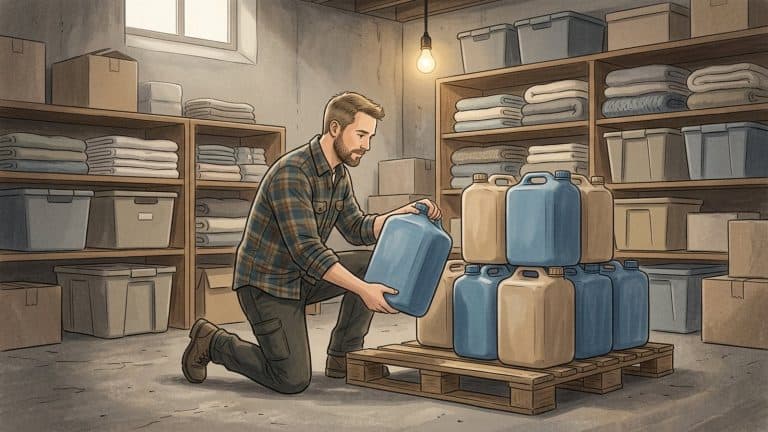
A filled 55-gallon barrel holds about 458 pounds of water, so a used or new barrel has to be placed where that load is safe before it is filled.
Water weighs about 8.329 pounds per U.S. gallon at 70°F, according to the U.S. Geological Survey. Multiply by 55 and the water alone comes to about 458 pounds (calculated), before the weight of the barrel itself. That is more than most people can move, and more than many upper floors, decks and shelves are meant to carry in one spot.
Three practical rules follow. Fill a barrel where it will stay, because it cannot be moved once full. Put it on a ground-level floor or a slab rather than an upper floor or a deck. And plan how you will get water out before you need it; a full barrel cannot be tipped or lifted, so a pump or siphon is part of the setup, not an extra. The CDC also says to replace water you stored yourself every 6 months, which means you will be emptying and refilling this barrel twice a year.
If those rules do not fit your home, several smaller containers may suit you better than one barrel. The container guide compares the formats: best emergency water storage containers.
Questions
Common questions about used barrels for water
These are the questions people most often ask before taking home a used 55-gallon drum.
Only if you can confirm it never held a toxic chemical. The CDC says not to use containers that previously held toxic chemicals, such as bleach or pesticides, and recommends FDA-approved food-grade containers. A used barrel with a documented food history may be a candidate; one with an unknown history should be treated as ruled out.
No. The CDC's rule is about what the container previously held, not how clean it is now, so a former chemical drum is ruled out for drinking water. The CDC's cleaning steps apply to containers that are already acceptable, such as food-grade containers, and do not make a chemical container suitable.
The CDC's emergency water guidance does not address metal drums. Used steel drums very often come from industrial service, which rules them out under the CDC's chemical rule or leaves their history unknown, and steel can rust. This site does not recommend a used steel drum for drinking water.
No. Colour is not a certification. Plastic drums of many colours, including blue, are used for chemicals as well as food. Food-grade status needs documentation from the manufacturer or supplier, and the barrel's history still has to rule out toxic chemicals.
The water alone weighs about 458 pounds, calculated from the U.S. Geological Survey figure of 8.329 pounds per gallon at 70°F. The empty barrel adds its own weight on top. That is why a barrel should be filled where it will stay, on a ground-level floor.
The CDC suggests surplus or camping supply stores as places to find food-grade water storage containers. Whatever the source, look for manufacturer documentation of food-grade material, and for a used barrel, documentation of what it held before.
Keep going
Where to go next
A barrel is one way to hold a household supply, and these pages help you decide how big that supply should be and how to keep it.
Sources
Where these statements come from
Every agency statement on this page is quoted from one of these sources, checked in September 2026.
- Centers for Disease Control and Prevention, “How to Create and Store an Emergency Water Supply” (reviewed June 27, 2025). cdc.gov — FDA-approved food-grade containers; surplus or camping supply stores; tightly closing, durable, unbreakable (not glass), narrow opening; do not use containers that previously held toxic chemicals such as bleach or pesticides; cleaning steps before use; replace home-filled water every 6 months. Metal drums are not mentioned. Checked September 2026.
- U.S. Geological Survey, “Water Density.” usgs.gov — 8.329 pounds per U.S. gallon at 70°F, used for the 458-pound figure. Checked September 2026.